What Is Venting Type? A Guide for Tankless Water Heaters Buyers (2026)
As an Amazon Associate we earn from qualifying purchases. Links on this page are affiliate links.
Understanding Venting Type for Buyers
The venting type explains how your tankless water heater exhausts combustion gases. This specification determines the materials, sizing, and installation path for your exhaust system. You will typically see two main categories: condensing and non-condensing units. Each type operates differently and requires specific venting solutions.
Non-condensing models exhaust hot gases directly to the outside. These units usually require standard metal vents, such as stainless steel or aluminum. The exhaust temperature remains high, often above 300 degrees Fahrenheit. This heat loss means less energy efficiency compared to other methods. You must ensure the vent pipe is sized correctly to handle these high temperatures safely.
Condensing models capture heat from the exhaust gases before they leave the unit. They use a secondary heat exchanger to cool the flue gases. This process allows the water to absorb more thermal energy. The exhaust temperature drops significantly, often below 100 degrees Fahrenheit. Because the gases are cooler, you can use PVC or CPVC plastic pipes for venting. These materials are cheaper and easier to install than metal.
However, condensing units produce acidic condensate water. You must install a drain line to remove this byproduct. The venting type also affects where you can place the unit. Non-condensing units often need more clearance and specific vertical venting requirements. Condensing units offer more flexibility in placement due to their lower exhaust temperatures.
When shopping, check the product specifications for the venting type. This detail dictates your entire installation plan. Choosing the wrong type can lead to improper ventilation or safety hazards. Understanding venting type explained helps you select a unit that fits your home’s existing infrastructure. It also impacts long-term efficiency and maintenance needs. Always verify the required vent material and size before purchasing.
Condensing vs Non-Condensing Venting
Condensing
Condensing units capture heat from exhaust gases, raising efficiency. They vent through plastic pipes, allowing flexible installation indoors or outdoors. The Rinnai RX199iN offers 11.1 GPM flow with dual-fuel capability. It suits homes needing high capacity and versatile venting. These units are compact, measuring 18.5 by 30.1 inches. They weigh 55 pounds. Efficiency comes with complexity. You may need specific condensate drainage. The Ranein RH12KG-C-NG provides 5.1 GPM for mid-sized homes. It weighs 26 pounds. The Rinnai IP175199C combi boiler adds space heating. It is larger at 45.3 inches tall. Choose this type for maximum efficiency and installation flexibility.
Non-Condensing
Non-condensing units exhaust hot gases directly. They require metal venting, often running vertically. The VancEpic VH11K-W-NG-U01 uses natural gas and weighs 25.4 pounds. It measures 14.4 by 24.6 inches. This type suits existing indoor setups with metal vents. The Rinnai REU-VE2125WD-US-P is for outdoor propane use. It delivers 6.6 GPM and weighs 49.2 pounds. The Rheem RTG-95DVELN-3 offers 9.5 GPM with WiFi. It weighs 46.5 pounds. These units are simpler to install if you have metal vents. They do not recover exhaust heat. You may see lower efficiency ratings. Choose this type if your home already has standard metal venting infrastructure.
Who Needs Condensing Venting
Who needs it
You need a condensing unit if maximizing energy efficiency is your top priority. These models capture heat from exhaust gases, which significantly raises their overall efficiency rating. This matters most if you live in a region with high utility costs, as the improved efficiency translates directly to lower operating expenses over time. Additionally, condensing units often allow for more flexible venting options. They can use plastic pipes, which permits installation in tighter spaces or locations where traditional metal venting is impractical. If your home layout restricts venting paths, or if you require a high-capacity unit that still maintains strong efficiency standards, this specification is critical for your decision. The ability to vent indoors or outdoors via plastic also simplifies the installation process for complex home designs.
Who can skip it
You can likely skip condensing technology if you prioritize upfront simplicity and lower initial complexity over maximum efficiency. Non-condensing units are generally more straightforward to install, particularly if you already have existing metal venting infrastructure in place. They do not require the specialized plastic venting materials that condensing models demand. If your primary concern is reliable hot water delivery without worrying about the nuances of exhaust heat recovery, a non-condensing unit may suffice. You should also consider skipping condensing if your current venting setup is rigid and difficult to modify. In such cases, the cost and effort of retrofitting for plastic vents might outweigh the long-term energy savings. Focus instead on flow rate and basic durability if efficiency is not your main driver.
Venting Glossary Terms
Condensing Venting
This method cools exhaust gases to recover latent heat. It allows the use of plastic pipes and improves overall energy efficiency for the unit.
Non-Condensing Venting
This type vents hot gases without heat recovery. It typically requires metal chimneys and operates at higher exhaust temperatures compared to condensing models.
Exhaust Gases
These are combustion byproducts released during heating. The venting system must safely route these gases outside to prevent indoor air quality issues.
Latent Heat
This is energy released when water vapor in exhaust cools. Condensing units capture this heat to warm your water, boosting efficiency ratings.
Vent Pipe Material
This refers to the substance used for exhaust routing. Plastic pipes suit condensing units, while metal pipes are standard for non-condensing systems.
Installation Path
This is the route the exhaust takes from the unit. The venting type dictates how flexible or rigid this path can be.
Efficiency Rating
This metric shows how effectively the unit uses fuel. Condensing venting often leads to higher ratings by capturing more heat from exhaust.
Quick picks
Our 6 picks

Rinnai 11.1 GPM Condensing Dual-Fuel Water Heater
Best for: High flow needs with flexible venting options
- Venting Type
- Condensing (what this guide is about)
- Fuel Type
- Natural Gas or Propane
- Flow Rate
- 11.1 GPM
- BTU
- 199k BTU
- Installation Location
- Indoor/Outdoor
- Dimensions
- 30.1 × 18.5 × 30.1 inches
View on Amazon: Rinnai 11.1 GPM Condensing Dual-Fuel Water Heater Affiliate link
The Rinnai RX199iN is a condensing tankless water heater delivering 11.1 GPM. It handles propane or natural gas and fits indoor or outdoor spaces. The unit measures 30.1 by 18.5 by 30.1 inches and weighs 55 pounds. Its high efficiency factor of .98 reduces energy use. You get reliable hot water for multiple fixtures without running out.
Pros
- 11.1 GPM flow rate supports up to seven fixtures
- Versa Vent allows indoor or outdoor installation
- Works with both propane and natural gas fuels
- High energy efficiency factor of .98
Cons
- WiFi control requires a separate Controlr module
- Outdoor installation needs a specific RX-OVC vent cap
- Labor warranty drops to one year if not registered within 90 days
Good fit if
- You need high flow for large homes
- You want flexible indoor or outdoor placement
- You use natural gas or propane
Skip if
- You want built-in WiFi without extra parts
- You prefer a non-condensing unit
- You cannot register the product quickly
Verdict: Rinnai RX199iN 11.1 GPM Condensing Heater delivers strong flow and efficiency for homes needing versatile venting. It suits buyers who want a single unit for gas or propane with indoor or outdoor flexibility.

VancEpic 4.8 GPM Natural Gas Tankless Heater
Best for: Whole-house hot water with precise temperature control
- Venting Type
- Non-Condensing (what this guide is about)
- Fuel Type
- Natural Gas
- Flow Rate
- 4.8 GPM
- BTU
- 110,000 BTU
- Installation Location
- Indoor
- Temperature Control
- ±1°F
View on Amazon: VancEpic 4.8 GPM Natural Gas Tankless Heater Affiliate link
This VancEpic unit delivers 4.8 GPM at 110,000 BTU for indoor natural gas installation. It uses a non-condensing venting design with an oxygen-free copper heat exchanger. The system maintains temperature within ±1°F and includes four preset modes. It supports three to five outlets. The compact 14.4-inch width fits tight spaces. You get stable hot water for whole-house use.
Pros
- 4.8 GPM flow rate for multiple outlets
- ±1°F precise temperature control
- Oxygen-free copper heat exchanger for durability
- Compact 14.4-inch width for tight spaces
- Four preset temperature modes for convenience
Cons
- Non-condensing venting requires specific clearance
- 2-year warranty is shorter than industry standard
- No smart app or remote control included
Good fit if
- You need reliable indoor hot water for 3-5 outlets
- You prefer precise temperature stability without fluctuations
- You have limited space for a compact unit
Skip if
- You require a condensing unit for maximum efficiency
- You want smart home integration or app control
- You need a warranty longer than 2 years
Verdict: VancEpic 4.8 GPM Natural Gas Tankless offers stable flow and precise heat for homes needing whole-house coverage. It suits buyers who prioritize compact size and temperature accuracy over smart features or extended warranties.

Ranein 5.1 GPM Condensing Natural Gas Water Heater
Best for: Efficient heating for 2-3 bathroom homes
- Venting Type
- Condensing (what this guide is about)
- Fuel Type
- Natural Gas
- Flow Rate
- 5.1 GPM
- BTU
- 120,000 BTU
- Voltage
- 120V
- Temperature Control
- 95°F–149°F, ±1°F
View on Amazon: Ranein 5.1 GPM Condensing Natural Gas Water Heater Affiliate link
This Ranein unit delivers 5.1 GPM at 120,000 BTU using condensing technology. It recycles exhaust heat to improve efficiency. The LED touchscreen allows precise temperature control from 95°F to 149°F. It includes a Category III vent kit and anti-freeze protection. This model suits households with 2-3 bathrooms seeking steady hot water.
Pros
- Condensing technology captures exhaust heat for efficiency
- 5.1 GPM flow rate supports multiple fixtures
- LED display shows real-time flow and gas usage
- Includes Category III stainless steel vent pipe
Cons
- Not recommended for elevations above 2,000 ft
- Requires professional installation by a licensed plumber
- Limited to Natural Gas fuel type in this variant
Good fit if
- You need efficient heating for 2-3 bathrooms
- You want precise temperature control via touchscreen
- You are installing in an area below 2,000 ft
Skip if
- You live at an elevation above 2,000 ft
- You prefer propane fuel over natural gas
- You want a unit that does not require professional installation
Verdict: Ranein 5.1 GPM Condensing Water Heater is a solid choice for mid-sized homes seeking efficiency and precise control, provided you are below 2,000 ft elevation.

Rinnai 6.1 GPM Outdoor Propane Water Heater
Best for: outdoor propane homes needing high flow
- Venting Type
- Non-Condensing (what this guide is about)
- Fuel Type
- Propane
- Flow Rate
- 6.1 GPM
- BTU
- 160k BTU
- Installation Location
- Outdoor
- Dimensions
- 24.6 x 14.1 x 10.8 in
View on Amazon: Rinnai 6.1 GPM Outdoor Propane Water Heater Affiliate link
The Rinnai RE160eP is a non-condensing tankless water heater designed for outdoor propane use. It delivers up to 6.1 GPM, supporting five fixtures simultaneously. Its compact footprint measures 24.6 x 14.1 x 10.8 inches. The unit features an LED screen for error codes and service reminders. This model suits homes with propane supply and outdoor installation space.
Pros
- Non-condensing venting type allows standard installation
- High flow rate of 6.1 GPM for multiple fixtures
- Compact outdoor design fits tight spaces
- 15-year limited warranty on heat exchanger
Cons
- Requires professional installation for safety
- WiFi control module sold separately
- Outdoor only, not suitable for indoor use
Good fit if
- You have a propane gas supply
- You need an outdoor installation location
- You require high flow for multiple bathrooms
Skip if
- You need indoor installation capability
- You use natural gas instead of propane
- You want built-in WiFi connectivity
Verdict: Rinnai RE160eP Outdoor Propane Heater is a robust choice for outdoor propane setups needing high flow. It fits homes with ample hot water demand and outdoor space. The unit delivers consistent performance without complex condensing vents.

Rheem RTG 9.5 GPM Natural Gas Water Heater
Best for: large homes with high hot water demand
- Venting Type
- Non-Condensing (what this guide is about)
- Fuel Type
- Natural Gas
- Flow Rate
- 9.5 GPM
- BTU
- 199,900 BTU/hr
- Installation Location
- Indoor
- Temperature Control
- ±1°F
View on Amazon: Rheem RTG 9.5 GPM Natural Gas Water Heater Affiliate link
This Rheem unit is a non-condensing natural gas heater designed for indoor use. It delivers 9.5 GPM at 35°F rise, supporting three to four simultaneous showers. The 199,900 BTU output and 0.82 UEF efficiency make it suitable for large homes. WiFi connectivity allows remote monitoring. It features a digital LED panel with ±1°F precision. The compact wall-mount design saves floor space.
Pros
- High 9.5 GPM flow rate for whole-house use
- 199,900 BTU/hr output supports multiple simultaneous fixtures
- WiFi enabled for remote control and monitoring
- Digital LED panel offers ±1°F temperature precision
- 0.82 UEF efficiency reduces energy consumption
Cons
- Non-condensing design requires specific venting setup
- Indoor installation only limits placement options
- Heavier at 46.5 pounds than some compact models
Good fit if
- You need high flow for 3-4 bathrooms
- You want WiFi control for your water heater
- You are replacing a large tank heater
Skip if
- You require outdoor installation capability
- You prefer propane fuel over natural gas
- You need a condensing model for maximum efficiency
Verdict: Rheem RTG-95DVELN 9.5 GPM Non-Condensing is ideal for large households needing high capacity and smart features. It fits homes with existing natural gas lines and indoor venting infrastructure.
Rinnai I-SERIES Plus Condensing Combi Boiler
Best for: Indoor heating and hot water in one unit
- Venting Type
- Condensing (what this guide is about)
- Fuel Type
- Natural Gas, Propane
- Installation Location
- Indoor
- Dimensions
- 45.3 x 19.5 x 19.5 in
- Use
- Commercial, Boiler
- Weight
- 79.4 pounds
View on Amazon: Rinnai I-SERIES Plus Condensing Combi Boiler Affiliate link
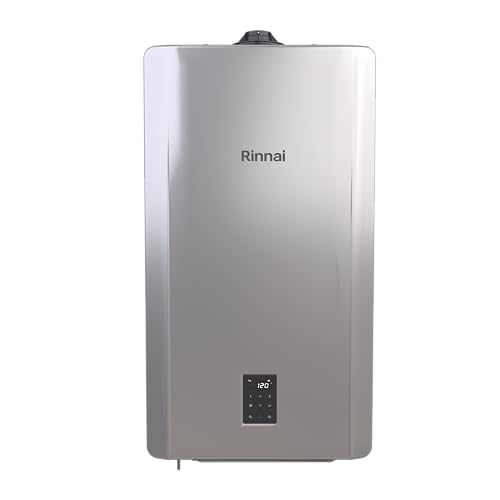
This Rinnai combi boiler delivers 175k BTU for space heating and 199k BTU for domestic hot water. It uses condensing venting technology to achieve a 96% AFUE rating. The unit measures 45.3 by 19.5 by 19.5 inches and weighs 79.4 pounds. It supports both natural gas and propane. Smart Connect Wi-Fi allows remote management. This appliance is designed for indoor installation in residential or commercial settings.
Pros
- Dual function provides both space heating and instant hot water
- High 96% AFUE efficiency rating for energy savings
- Smart Connect Wi-Fi capability for remote control
- Compatible with both natural gas and propane fuel types
Cons
- Large physical footprint at 45.3 inches tall
- Heavier build at 79.4 pounds requires sturdy mounting
- Limited 5-year parts and labor warranty without registration
Good fit if
- You need a single unit for both home heating and hot water
- You have the space to accommodate a 45-inch tall appliance
- You want Wi-Fi control for your heating system
Skip if
- You require a dedicated hot water heater without heating capabilities
- You have limited vertical space for installation
- You prefer a non-condensing venting system
Verdict: Rinnai I-SERIES Plus 175k BTU Condensing Combi suits homeowners seeking an all-in-one heating and hot water solution with high efficiency. Its dual output and smart features make it ideal for multi-family or commercial indoor installations where space allows.
Specifications side by side
| Spec | Rinnai 11.1 GPM Condensing Dual-Fuel Water Heater | VancEpic 4.8 GPM Natural Gas Tankless Heater | Ranein 5.1 GPM Condensing Natural Gas Water Heater | Rinnai 6.1 GPM Outdoor Propane Water Heater | Rheem RTG 9.5 GPM Natural Gas Water Heater | Rinnai I-SERIES Plus Condensing Combi Boiler |
|---|---|---|---|---|---|---|
| Fuel Type | Natural Gas or Propane | Natural Gas | Natural Gas | Propane | Natural Gas | Natural Gas, Propane |
| Flow Rate | 11.1 GPM | 4.8 GPM | 5.1 GPM | 6.1 GPM | 9.5 GPM | not stated |
| BTU | 199k BTU | 110,000 BTU | 120,000 BTU | 160k BTU | 199,900 BTU/hr | not stated |
| Installation Location | Indoor/Outdoor | Indoor | not stated | Outdoor | Indoor | Indoor |
| Voltage | not stated | not stated | 120V | not stated | not stated | not stated |
| Temperature Control | not stated | ±1°F | 95°F–149°F, ±1°F | not stated | ±1°F | not stated |
| Certification | not stated | not stated | ANSI Z21.10.3 | not stated | CSA | not stated |
| Dimensions | not stated | 24.6 x 14.4 x 14.4 in | 22 × 14.2 × 6.4 in | 24.6 x 14.1 x 10.8 in | 24.2 x 13.5 x 10.3 inches | 45.3 x 19.5 x 19.5 in |
| Use | not stated | not stated | not stated | not stated | not stated | Commercial, Boiler |
| Venting Type | Condensing | Non-Condensing | Condensing | Non-Condensing | Non-Condensing | Condensing |
| Features | not stated | not stated | not stated | not stated | WiFi | not stated |
| Weight | 55 pounds | 25.4 pounds | 26 pounds | 49.2 pounds | 46.5 pounds | 79.4 pounds |
| Size | 11.1 GPM | 4.8GPM, 110,000BTU, NG | not stated | 6.6 GPM | 9.5 GPM (WiFi) | 175K BTU / DHW 199K BTU |
| Color | Silver | Non-Condensing | Gray | Silver | Gray | Gray |
| Model | RX199iN | VH11K-W-NG-U01 | RH12KG-C-NG | REU-VE2125WD-US-P | RTG-95DVELN-3 | IP175199C |
Frequently asked questions
Can I vent a condensing tankless heater through plastic pipe?
Yes, condensing units typically use plastic venting. This type captures heat from exhaust gases, which cools the exhaust enough to allow safe passage through plastic pipes. The Rinnai RX199iN is a condensing model that supports this flexible venting approach. This allows installation in more locations compared to metal-only systems.
Do non-condensing heaters require metal venting?
Non-condensing units usually require metal venting. They vent hot exhaust gases without recovering heat, so the pipes must withstand high temperatures. The VancEpic VH11K-W-NG-U01 is a non-condensing model designed for indoor use. It likely needs standard metal chimney or direct vent pipes to handle the hotter exhaust safely.
Which venting type is better for outdoor installation?
Non-condensing units are often better for outdoor setups. The Rinnai REU-VE2125WD-US-P is an outdoor propane model with non-condensing venting. It delivers consistent performance without complex condensing vents. Outdoor units often use simpler venting paths since they are exposed to the air, making non-condensing designs a robust choice for exterior walls.
Does venting type affect the physical size of the unit?
Venting type influences design but size varies by model. Condensing units like the Rinnai IP175199C can be larger due to internal heat exchangers. This combi boiler measures 45.3 inches tall. Non-condensing models like the Rheem RTG-95DVELN-3 are more compact. Its dimensions are 24.2 inches high. You should check specific specs for your space.
Can a condensing unit run on propane?
Yes, some condensing units support dual-fuel operation. The Rinnai RX199iN handles both natural gas and propane. This flexibility allows you to choose your fuel source without changing the venting type. Condensing technology works with either fuel to capture exhaust heat. This makes it a versatile option for homes with different fuel availability.
Is WiFi connectivity related to the venting type?
No, WiFi is a separate feature from venting. The Rheem RTG-95DVELN-3 includes WiFi for remote control. It is a non-condensing unit with 9.5 GPM flow. Venting type determines exhaust materials, while connectivity handles smart features. You can have a non-condensing heater with smart controls, or a condensing unit without them.
What is the difference in exhaust temperature between the two types?
Condensing units produce cooler exhaust than non-condensing ones. Condensing models capture latent heat, lowering the exhaust temperature. This allows plastic pipes. Non-condensing units vent hotter gases directly. The VancEpic VH11K-W-NG-U01 is non-condensing and likely has hotter exhaust. This requires metal pipes to prevent damage and ensure safety during operation.