What Is Flow Rate? A Guide for Tankless Water Heaters Buyers (2026)
As an Amazon Associate we earn from qualifying purchases. Links on this page are affiliate links.
Understanding Flow Rate for Buyers
Flow rate is the volume of water a tankless water heater can deliver at a specific temperature rise. It is measured in gallons per minute, or GPM. This number tells you how much hot water you get while the unit is running. It is one of the most important specs to check before you buy.
The spec is labeled directly on product listings. You will see values like 1.58 GPM, 2.64 GPM, or 8.4 GPM. A low number, such as 1.58 GPM, means the unit provides a gentle stream. This is suitable for a single bathroom sink or a shower in a small home. A high number, such as 8.4 GPM, supports multiple fixtures running at the same time. It can handle a full bathroom suite or a large kitchen.
How it works depends on your water temperature. The heater must raise the incoming cold water to your desired hot temperature. If the incoming water is very cold, the unit uses more energy to heat it. This can reduce the flow rate. If the incoming water is already warm, the unit can push more water through while maintaining the temperature. This is why flow rates vary by season in some regions.
Buyers need to calculate their total demand. List every fixture you plan to use at once. A shower might need 2 GPM. A kitchen sink might need 1.5 GPM. Add these numbers together. Your heater must meet or exceed that total. If you choose a unit with a flow rate of 3.18 GPM, you cannot run a shower and the dishwasher at the same time without a drop in temperature. Understanding flow rate explained helps you match the unit to your household size and usage habits. Check the specs carefully. Do not guess. The right number ensures you have hot water when you need it.
Flow Rate Options Compared
1.58 GPM
This flow rate delivers a modest volume of hot water. You will find it suitable for single-point use, such as a bathroom sink or a small camping shower. The Camplux 1.58 GPM Portable Propane Water Heater exemplifies this tier. Its low output makes it ideal for off-grid scenarios or RVs where water conservation matters. You cannot run multiple fixtures simultaneously at this rate. The trade-off is portability and lower energy consumption. It fits users who prioritize mobility over high-volume output. This unit is compact and lightweight, weighing just 13 pounds. It is not designed for whole-home supply or busy family bathrooms.
4.3 GPM
This flow rate is ideal for most family homes. The VancEpic 4.3 GPM Natural Gas Tankless Heater fits this category. It provides reliable hot water for multiple bathrooms. You can run a shower and a kitchen sink at the same time without noticeable temperature fluctuations. This unit is designed for indoor installation with natural gas. It offers strong heating power for daily family use. The trade-off is the need for proper gas infrastructure and venting. It is not portable. This flow rate strikes a balance between efficiency and capacity, making it a practical choice for standard households with moderate hot water demands.
6.6 GPM
This flow rate handles multi-point hot water needs in small homes. The Thermomate 27kW Electric Tankless Water Heater delivers this output. You can run two bathrooms and a kitchen sink simultaneously. It suits homes with strong electrical capacity, as it requires 27 kW of power. The unit provides steady heat without tank storage. It is compact, weighing 19 pounds. This rate is excellent for busy households that need consistent hot water. The trade-off is the high electrical demand. You must ensure your home’s electrical panel can support this load. It is a robust solution for electric-powered homes seeking high performance.
7.5 GPM
This flow rate supports large households with high demand. The Rinnai 7.5 GPM Outdoor Propane Tankless Water Heater is built for this level. You can run multiple bathrooms, a kitchen, and laundry machines concurrently. It is designed for outdoor installation with propane. The unit is heavier, weighing 63 pounds, and requires sturdy mounting. This rate ensures you never run out of hot water, even during peak usage. The trade-off is the need for outdoor space and gas supply. It is not suitable for indoor use without specific venting. This option fits buyers prioritizing high output and reliability over compact size or indoor convenience.
8.4 GPM
This is the highest flow rate in this comparison. The Rheem RTG 8.4 GPM Indoor Natural Gas Water Heater delivers maximum volume. It is designed for whole-house hot water demand. You can run multiple showers, sinks, and appliances simultaneously. This unit suits large households with existing gas infrastructure. It is non-condensing and requires indoor venting. The trade-off is its size and weight, at 46.5 pounds. It is not portable. This flow rate ensures consistent hot water for any fixture in your home. It is the best choice for large families or homes with multiple bathrooms that need uninterrupted supply.
9.5 GPM
This flow rate represents the top end of capacity. No specific product in this list matches this exact number, but it indicates a high-volume commercial or very large residential unit. You can run all fixtures in a large home at once. This rate is suitable for properties with significant hot water needs. The trade-off is likely higher energy consumption and installation complexity. You need robust gas or electrical infrastructure to support this output. It is not practical for small apartments or single-bathroom setups. This tier is for users who require maximum hot water availability without any compromise on pressure or temperature stability.
Is Flow Rate Worth Your Money
Who needs it
You need high flow rates if you plan to run multiple fixtures at once. A unit delivering 8.4 GPM or 9.5 GPM supports simultaneous showers and kitchen use. If your household has two or more bathrooms, lower outputs like 1.58 GPM or 2.64 GPM will cause pressure drops. You will notice cold interruptions when another tap opens. Choose higher GPM specs for large families or homes with high hot water demand. The 6.6 GPM and 7.5 GPM models offer a middle ground for moderate usage. They handle one shower and a sink without strain. Prioritize these specs if comfort and consistent temperature are your main goals. Lower flow rates force you to wait or compromise on shower pressure. For whole-house comfort, do not settle for single-point capacity.
Who can skip it
You can ignore high flow rate specs if you only need hot water for one specific task. A 1.58 GPM unit is sufficient for a remote cabin or a single bathroom sink. If you do not run multiple fixtures simultaneously, higher GPM ratings add unnecessary complexity and cost. Focus on energy efficiency or portability instead. Small RVs or camping setups benefit from compact, low-flow models that save propane and space. Do not pay for excess capacity you will never use. If you are installing a heater for a single sink in a garage, the 2.64 GPM or 3.18 GPM options are adequate. High flow rates only matter when demand is high. For low-usage scenarios, prioritize size, weight, and fuel type over volume. You will not notice the difference in daily comfort if your usage is minimal.
Flow Rate Glossary
Gallons per minute
The standard unit for measuring flow rate. It indicates how many gallons of water pass through the heater each minute during operation.
Temperature rise
The difference between the incoming cold water temperature and the heated output. Higher rises require more energy and may reduce total flow capacity.
Simultaneous use
Running multiple fixtures at once, like a shower and kitchen sink. Your unit must have enough flow rate to handle this combined demand.
Single-point use
Serving one fixture, such as a bathroom sink or outdoor tap. Lower flow rates, around 1.5 to 2 GPM, are typically sufficient here.
Capacity
The maximum volume of hot water the unit can produce. It determines how many fixtures you can run without a drop in water pressure.
Wattage
The electrical power consumption for electric models. Higher wattage usually supports higher flow rates but requires heavier electrical wiring and circuit breakers.
BTU
British Thermal Unit, measuring heat energy for gas models. Higher BTU ratings generally allow for greater flow rates and faster heating speeds.
Voltage
The electrical supply required, often 240 volts for electric units. Correct voltage ensures the heater operates at its rated flow and efficiency.
Quick picks
| # | Product | Best for | Price |
|---|---|---|---|
| 1 | Camplux 1.58 GPM Portable Propane Water Heater | camping and off-grid low-pressure use | Check price of Camplux 1.58 GPM Portable Propane Water Heater on Amazon |
| 2 | VancEpic 4.3 GPM Natural Gas Tankless Heater | Indoor family homes with natural gas | Check price of VancEpic 4.3 GPM Natural Gas Tankless Heater on Amazon |
| 3 | Rheem RTG 8.4 GPM Indoor Natural Gas Water Heater | Whole-house hot water demand | Check price of Rheem RTG 8.4 GPM Indoor Natural Gas Water Heater on Amazon |
| 4 | Ranein 12L Outdoor Propane Tankless Water Heater | outdoor camping and yard cleaning tasks | Check price of Ranein 12L Outdoor Propane Tankless Water Heater on Amazon |
| 5 | Thermomate 27kW 6.6 GPM Electric Tankless Water Heater | multi-point hot water in small homes | Check price of Thermomate 27kW 6.6 GPM Electric Tankless Water Heater on Amazon |
| 6 | Rinnai 7.5 GPM Outdoor Propane Tankless Water Heater | Large outdoor propane setups | Check price of Rinnai 7.5 GPM Outdoor Propane Tankless Water Heater on Amazon |
Our 6 picks

Camplux 1.58 GPM Portable Propane Water Heater
Best for: camping and off-grid low-pressure use
- Flow Rate
- 1.58 GPM (what this guide is about)
- Fuel Type
- Propane
- BTU
- 41,000 BTU/hr
- Temperature Control
- 50-140°F
- Dimensions
- 15.7 x 11.8 x 5.39 inches
- Weight
- 13 pounds
View on Amazon: Camplux 1.58 GPM Portable Propane Water Heater Affiliate link
The Camplux BW158 is a lightweight, portable propane tankless water heater designed for outdoor and off-grid use. It delivers a flow rate of 1.58 GPM with a maximum output of 41,000 BTU/hr. The unit weighs only 13 pounds and features a foldable handle for easy transport. It operates with a minimum water pressure of 3.0 PSI, making it suitable for remote cabins or camping. Temperature control ranges from 50 to 140°F via an LED display.
Pros
- Lightweight design at 13 pounds with a foldable handle
- Low water pressure start capability at 3.0 PSI
- Clear LED temperature display with 50-140°F range
- Simple connection to standard 20 lb propane tanks
Cons
- Low flow rate of 1.58 GPM limits simultaneous use
- Requires manual knob adjustment for temperature control
- Outdoor-focused design may lack indoor mounting options
Good fit if
- You need hot water for camping or outdoor activities
- You are installing in a remote location with low water pressure
- You require a lightweight, portable solution for travel
Skip if
- You need high flow rates for multiple showers
- You require indoor permanent installation
- You prefer digital temperature presets over manual knobs
Verdict: Camplux BW158 Propane Portable Heater is a specialized tool for campers and off-grid users who prioritize portability and low-pressure operation over high volume. It fits those who need hot water on the go rather than for whole-home supply.

VancEpic 4.3 GPM Natural Gas Tankless Heater
Best for: Indoor family homes with natural gas
- Flow Rate
- 4.3 GPM (what this guide is about)
- Fuel Type
- Natural Gas
- BTU
- 100,000 BTU
- Installation Location
- Indoor
- Temperature Control
- ±1°F
- Dimensions
- 24.6 x 14.4 x 14.4 inches
View on Amazon: VancEpic 4.3 GPM Natural Gas Tankless Heater Affiliate link
The VancEpic 4.3 GPM natural gas water heater delivers 100,000 BTU of heating power for indoor use. It features an oxygen-free copper heat exchanger and ±1°F temperature control for stable output. This unit supports three to four simultaneous water outlets, making it suitable for family homes. The compact design fits standard installations while providing consistent hot water on demand.
Pros
- 4.3 GPM flow rate supports multiple outlets
- 100,000 BTU input for strong heating
- ±1°F precise temperature control
- Oxygen-free copper heat exchanger for efficiency
Cons
- Indoor installation only
- Non-condensing venting type
- 2-year warranty period
Good fit if
- You need hot water for three or four fixtures
- You prefer natural gas over propane or electricity
- You want precise temperature stability
Skip if
- You require outdoor installation
- You need a flow rate above 4.3 GPM
- You want a longer warranty than two years
Verdict: VancEpic 4.3 GPM Natural Gas Water Heater fits households needing reliable indoor hot water for multiple bathrooms. It offers strong heating power and stable temperatures for daily family use.

Rheem RTG 8.4 GPM Indoor Natural Gas Water Heater
Best for: Whole-house hot water demand
- Flow Rate
- 8.4 GPM (what this guide is about)
- Fuel Type
- Natural Gas
- BTU
- 180,000 BTU/hr
- Installation Location
- Indoor
- Temperature Control
- ±1°F
- Certification
- CSA
View on Amazon: Rheem RTG 8.4 GPM Indoor Natural Gas Water Heater Affiliate link
This Rheem unit delivers 8.4 GPM at a 35°F rise, powered by 180,000 BTU/hr of natural gas. It features a non-condensing design for indoor installation and a 0.82 UEF rating. The digital LED panel allows precise temperature adjustments within ±1°F. It is built for whole-house use, supporting three to four simultaneous water points. The compact wall-mount design saves floor space.
Pros
- 8.4 GPM flow rate supports multiple showers
- 180,000 BTU/hr output for high demand
- Precision ±1°F temperature control
- 0.82 Uniform Energy Factor rating
- CSA certified safety features
Cons
- Indoor installation only
- Requires professional setup
- Non-condensing venting design
Good fit if
- You need high flow for whole-house use
- You have a gas line for indoor mounting
- You want precise temperature stability
Skip if
- You require outdoor installation
- You prefer DIY setup
- You need WiFi connectivity
Verdict: Rheem RTG 8.4 GPM Natural Gas suits large households needing reliable hot water for multiple bathrooms. It fits homes with existing gas infrastructure and indoor venting options.
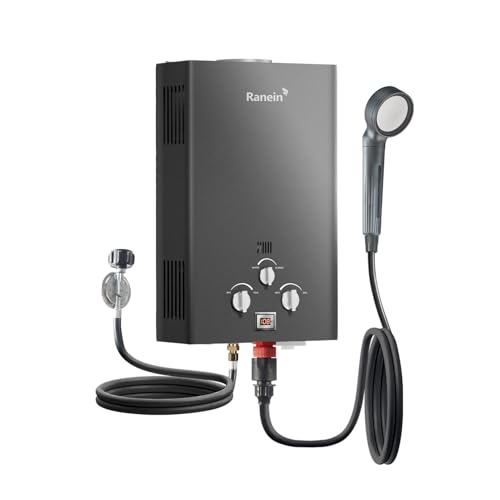
Ranein 12L Outdoor Propane Tankless Water Heater
Best for: outdoor camping and yard cleaning tasks
- Flow Rate
- 3.18 GPM (what this guide is about)
- Fuel Type
- Propane
- BTU
- 68,000 BTU
- Installation Location
- Outdoor
- Temperature Control
- 55°F–109°F
- Dimensions
- 21.7" x 7.1" x 13"
View on Amazon: Ranein 12L Outdoor Propane Tankless Water Heater Affiliate link
The Ranein 12L delivers 3.18 GPM of hot water using propane fuel. It generates 68,000 BTU to heat water from 55°F to 109°F. This outdoor unit measures 21.7 x 13 x 13 inches and weighs 18 pounds. It features an oxygen-free copper heat exchanger and stainless steel shell. You should choose this model for outdoor tasks like yard cleaning or cabin supply where ventilation is guaranteed.
Pros
- 3.18 GPM flow rate for steady hot water
- 68,000 BTU output for efficient heating
- Compact 18 lb design for easy portability
- Copper heat exchanger reduces heat loss
Cons
- Outdoor installation only, not for indoor use
- Limited temperature range of 55°F to 109°F
- Requires 3.6 PSI operating pressure
Good fit if
- You need hot water for outdoor yard cleaning
- You are setting up a busy campsite
- You have a well-ventilated outdoor space
Skip if
- You require indoor installation in a bathroom
- You need a flow rate above 3.18 GPM
- You want water heated above 109°F
Verdict: The Ranein 12L Propane Tankless Water Heater is a compact outdoor solution for you. It fits buyers who need reliable hot water for camping or yard work in ventilated areas.

Thermomate 27kW 6.6 GPM Electric Tankless Water Heater
Best for: multi-point hot water in small homes
- Flow Rate
- 6.6 GPM (what this guide is about)
- Fuel Type
- Electric
- Wattage
- 27 kW
- Installation Location
- Indoor
- Voltage
- 240 V
- Temperature Control
- 80°F to 140°F
View on Amazon: Thermomate 27kW 6.6 GPM Electric Tankless Water Heater Affiliate link
The ThermoMate 27kW electric tankless water heater delivers up to 6.6 GPM of hot water. It requires 240V power and three 40-amp breakers. The unit features a cast aluminum heating element for durability. It maintains temperatures between 80°F and 140°F. This compact design suits homes needing simultaneous fixture use. It fits small closets or apartments well.
Pros
- High flow rate of 6.6 GPM
- Cast aluminum heating element resists scale
- Compact dimensions of 17.09 x 13.15 x 3.15 inches
- ETL certified for safety
Cons
- Requires three separate 40-amp breakers
- Needs 8 AWG copper wiring
- Heavy-duty electrical panel capacity required
Good fit if
- You have a 150-amp electrical panel
- You need hot water for multiple fixtures
- You want a compact indoor unit
Skip if
- You cannot install three 40-amp breakers
- You lack space for 8 AWG wiring
- You prefer propane or natural gas
Verdict: ThermoMate 27kW Electric Tankless Heater suits homes with strong electrical capacity. It provides reliable flow for busy households. You get steady heat without tank storage.

Rinnai 7.5 GPM Outdoor Propane Tankless Water Heater
Best for: Large outdoor propane setups
- Flow Rate
- 7.5 GPM (what this guide is about)
- Fuel Type
- Propane
- Installation Location
- Outdoor
- Dimensions
- 35 x 14.5 x 22 inches
- Weight
- 63 pounds
View on Amazon: Rinnai 7.5 GPM Outdoor Propane Tankless Water Heater Affiliate link
This Rinnai propane unit delivers up to 7.5 GPM for simultaneous use. It measures 35 x 14.5 x 22 inches and weighs 63 pounds. Designed for outdoor installation, it offers flexible venting options. The 12-year heat exchanger warranty supports long-term reliability. You get consistent hot water for multiple appliances without tank storage.
Pros
- High flow rate of 7.5 GPM
- 12-year residential heat exchanger warranty
- Compact dimensions for outdoor placement
- Multiple venting options available
Cons
- Requires outdoor installation only
- Heavier at 63 pounds
- Professional installation recommended
Good fit if
- You need high flow for multiple fixtures
- You have an outdoor utility space
- You prefer propane fuel source
Skip if
- You require indoor installation
- You want natural gas fuel
- You need a lighter unit
Verdict: Rinnai RUS75eP Propane 7.5 GPM suits large households needing high output outdoors. It fits buyers prioritizing flow rate and warranty length over indoor convenience.
Specifications side by side
| Spec | Camplux 1.58 GPM Portable Propane Water Heater | VancEpic 4.3 GPM Natural Gas Tankless Heater | Rheem RTG 8.4 GPM Indoor Natural Gas Water Heater | Ranein 12L Outdoor Propane Tankless Water Heater | Thermomate 27kW 6.6 GPM Electric Tankless Water Heater | Rinnai 7.5 GPM Outdoor Propane Tankless Water Heater |
|---|---|---|---|---|---|---|
| Fuel Type | Propane | Natural Gas | Natural Gas | Propane | Electric | Propane |
| Flow Rate | 1.58 GPM | 4.3 GPM | 8.4 GPM | 3.18 GPM | Up to 6.6 GPM | 7.5 GPM |
| BTU | 41,000 BTU/hr | 100,000 BTU | 180,000 BTU/hr | 68,000 BTU | not stated | not stated |
| Wattage | not stated | not stated | not stated | not stated | 27 kW | not stated |
| Installation Location | not stated | Indoor | Indoor | Outdoor | Indoor | Outdoor |
| Voltage | not stated | not stated | not stated | not stated | 240 V | not stated |
| Temperature Control | 50-140°F | ±1°F | ±1°F | 55°F–109°F | 80°F to 140°F | not stated |
| Certification | not stated | not stated | CSA | not stated | ETL Listed | not stated |
| Dimensions | 15.7 x 11.8 x 5.39 inches | 24.6 x 14.4 x 14.4 inches | 24.2 x 13.5 x 10.3 inches | 21.7" x 7.1" x 13" | 17.09 x 13.15 x 3.15 inches | 35 x 14.5 x 22 inches |
| Use | not stated | not stated | not stated | Camping, Cabins | not stated | not stated |
| Venting Type | not stated | Non-Condensing | Non-Condensing | not stated | not stated | not stated |
| Weight | 13 pounds | 25.1 pounds | 46.5 pounds | 18 pounds | 19 pounds | 63 pounds |
| Color | White | Non-Condensing | Gray | Gray | Gray | Outdoor Installation |
| Model | BW158-CA | VH10K-W-NG-U01 | RTG-84DVLN-3 | TMYD-01020120 | EH270 | RUS Series |
| Size | not stated | 4.3GPM, 100,000BTU, NG | 8.4 GPM (Standard) | not stated | not stated | 7.5 GPM |
Frequently asked questions
How do I match flow rate to my household size?
You should select a unit based on the number of bathrooms you plan to use simultaneously. For example, the Rheem 8.4 GPM model supports whole-house demand for large families. Smaller units like the Camplux 1.58 GPM are better for single-point use or camping. Choose a higher GPM if you need multiple fixtures running at once.
What is the difference between indoor and outdoor installation regarding flow?
Installation location affects venting and durability but not the rated flow rate itself. Indoor units, like the VancEpic 4.3 GPM, often use non-condensing venting and fit inside homes. Outdoor models, such as the Rinnai 7.5 GPM, are built for exterior exposure. Both types deliver their specified GPM, but you must match the unit to your available space and climate.
Does fuel type change the gallons per minute output?
Fuel type determines power source, not the flow rate number directly. Gas models like the Rheem 8.4 GPM and propane units like the Ranein 3.18 GPM both deliver their rated flow. Electric models, such as the Thermomate 6.6 GPM, also provide high flow if your electrical capacity supports the wattage. The GPM rating remains the key metric for volume regardless of fuel.
Can I use a low GPM unit for a shower?
Yes, but it depends on your preference for water volume. The Camplux 1.58 GPM is suitable for small camping showers or single sinks. Higher units like the VancEpic 4.3 GPM provide a more robust shower experience for indoor homes. If you want a full-body spray, aim for at least 2.5 GPM. Lower rates may feel weak during bathing.
What does the BTU rating tell me about flow performance?
BTU measures heating power, which helps maintain temperature at high flow rates. The Ranein 12L model offers 68,000 BTU to support its 3.18 GPM output. Higher BTU units, like the Rheem 8.4 GPM, can heat water faster for larger volumes. While BTU does not define GPM, it ensures the water stays hot when you turn the tap on full.
Is a higher GPM always better for my home?
Not necessarily. A higher GPM like the Rinnai 7.5 GPM is excellent for large households but may be overkill for a small apartment. The VancEpic 4.3 GPM fits many family homes well. If you only run one fixture at a time, a lower GPM saves space and energy. Match the flow rate to your actual usage habits to avoid unnecessary size or cost.
How does electric tankless flow compare to gas flow rates?
Electric units like the Thermomate 6.6 GPM can match many gas models in volume. The key difference is installation requirements, not the GPM number. Gas units, such as the Rheem 8.4 GPM, often handle higher demands due to fuel power. Electric models rely on wattage, like the 27 kW in the Thermomate, to achieve similar flow. Both can provide consistent hot water for your needs.