Fuel Type in Tankless Water Heaters: What It Is and Is It Worth It?
As an Amazon Associate we earn from qualifying purchases. Links on this page are affiliate links.
Understanding Fuel Type in Tankless Heaters
The fuel type explained defines how your tankless water heater generates heat. You choose between propane, natural gas, or electric options. This decision impacts installation, performance, and long-term operation. Each fuel source has distinct characteristics that affect your home setup.
Natural gas units connect to your home’s existing gas line. They provide continuous hot water for high-demand households. These models often deliver higher flow rates than electric versions. You need a gas line and proper ventilation for combustion gases. If your home already has natural gas, this option simplifies installation.
Propane units use liquid petroleum gas stored in tanks. They work well in rural areas without gas lines. Propane heaters are portable and can be installed outdoors easily. They perform consistently in cold weather. You must monitor tank levels and arrange refills. The fuel source requires specific venting to remove exhaust safely.
Electric tankless heaters use heating elements powered by your electrical grid. They produce no combustion gases, so venting is not required. This makes them ideal for apartments or small spaces. However, they demand significant electrical capacity. You may need to upgrade your breaker panel to handle the load. Electric models are generally quieter and have fewer maintenance needs.
When shopping, check the specifications for the fuel type. Listings will clearly state if the unit is gas, propane, or electric. Match the spec to your home’s infrastructure. Ensure you have the correct gas line or electrical service. Choosing the right fuel type ensures your system runs efficiently. It also prevents costly retrofitting later. Consider your current energy setup before buying. The fuel type is a foundational spec that dictates everything else about the unit.
Compare Fuel Type Options
Propane
Propane units operate independently of utility gas lines. This makes them ideal for RVs or homes without natural gas access. The APUS 68,000 BTU RV Propane Water Heater fits this need. It delivers hot water on demand using stored propane tanks. You gain flexibility in installation location. However, you must manage tank levels and refills. The VEVOR 42,000 BTU Propane RV Tankless Water Heater also uses this fuel. It includes remote control for easy adjustments. Propane provides consistent heat even in cold weather. You need proper ventilation for safe exhaust. This option suits mobile living or remote properties.
Natural Gas
Natural gas heaters connect directly to your home gas supply. They offer continuous hot water without tank refills. The Ranein 5.3 GPM Natural Gas Tankless Water Heater suits indoor whole-family use. It provides strong flow rates for multiple bathrooms. The APUS 120,000 BTU Natural Gas Tankless Heater handles high demand. It reaches 5.0 GPM for simultaneous uses. Natural gas is often more cost-effective than electricity for high usage. You need a gas line and proper venting. Indoor models require specific clearance and exhaust paths. This option fits homes with existing gas infrastructure. It delivers reliable performance for daily household routines.
Electric
Electric heaters use electrical resistance to heat water. They install easily where power is available. The Thermomate 6.5-Gallon Under-Sink Electric Mini-Tank serves single sink needs. It fits under cabinets for point-of-use heating. This unit runs on 120V power. It is practical for handwashing or dish rinsing. You avoid gas line installation costs. Electric models are compact and quiet. The Suburban 6-Gallon Gas and Electric RV Water Heater offers dual fuel. It provides flexibility for small RVs. Electric options have lower upfront costs. They may have slower recovery rates for large demands. Check your electrical panel capacity before installing.
Is Fuel Type Worth Your Choice
Who needs it
You need to focus on fuel type if your home’s existing infrastructure limits your options. Natural gas users benefit from continuous supply and lower operating costs for high-volume usage. This is ideal for large families or homes with multiple bathrooms running simultaneously. Propane is essential if you live in a rural area without natural gas lines. It offers flexibility and independence from utility grids. Electric models suit small households or specific applications like point-of-use sinks. They require minimal venting and simple electrical upgrades. If you prioritize energy efficiency and easy installation in tight spaces, electric is a strong candidate. Your decision hinges on available connections and daily hot water demand. Matching the fuel to your home’s capabilities ensures reliable performance and avoids costly retrofits. Consider your local utility rates and availability before committing.
Who can skip it
You can ignore detailed fuel comparisons if you are replacing a like-for-like unit. If your current system works well and you plan to keep the same connection, the switch is straightforward. Focus on flow rate and temperature rise instead. These specs determine actual performance more than the fuel source itself. Also, prioritize unit size and physical dimensions if space is tight. Venting requirements vary by fuel, but if you already have the necessary infrastructure, that hurdle is cleared. Look at warranty terms and brand reliability for long-term peace of mind. Maintenance needs differ slightly, but regular upkeep matters most regardless of fuel type. If you are installing a new unit in a location with all utilities available, you have the freedom to choose based on other features. Let efficiency ratings and capacity guide your final selection rather than fuel preference alone.
Fuel Type Glossary
BTU Rating
British Thermal Units measure heating power. Higher numbers mean faster water heating. Look for 100,000 BTU for strong performance in cold climates or high-demand homes.
Flow Rate
Gallons per minute (GPM) shows output speed. A 0.5 GPM unit suits single sinks. Aim for 2.5 GPM or higher to handle showers and laundry simultaneously.
Gas Line
The pipe delivering fuel to your home. Natural gas units need a fixed connection. Propane tanks offer flexibility where gas lines are absent or impractical.
Venting Type
How exhaust leaves the unit. Direct vent uses sealed pipes. Power vent pushes air out. Proper venting prevents dangerous gas buildup inside your living space.
Voltage
Electrical power requirement. Standard homes use 120V or 240V. Higher voltage units heat water faster but may need dedicated circuits and professional electrical installation.
Wattage
Electric power consumption for tankless heaters. Higher wattage means quicker heating. Check your panel capacity. Large units often require 3,000 to 4,500 watts per circuit.
Indoor Unit
Heaters installed inside your home. They need proper ventilation and clearance. These units often save space and protect components from freezing weather outside.
Outdoor Unit
Heaters designed for exterior mounting. They use weather-resistant materials. These save indoor space but may need insulation kits in very cold regions.
Quick picks
| # | Product | Best for | Price |
|---|---|---|---|
| 1 | APUS 68,000 BTU RV Propane Water Heater | RV propane hot water | Check price of APUS 68,000 BTU RV Propane Water Heater on Amazon |
| 2 | Ranein 5.3 GPM Natural Gas Tankless Water Heater | indoor whole-family hot water supply | Check price of Ranein 5.3 GPM Natural Gas Tankless Water Heater on Amazon |
| 3 | Thermomate 6.5-Gallon Under-Sink Electric Mini-Tank | single sink point-of-use heating | Check price of Thermomate 6.5-Gallon Under-Sink Electric Mini-Tank on Amazon |
| 4 | VEVOR 42,000 BTU Propane RV Tankless Water Heater | RVs needing propane heat and remote control | Check price of VEVOR 42,000 BTU Propane RV Tankless Water Heater on Amazon |
| 5 | APUS 120,000 BTU Natural Gas Tankless Heater | Indoor multi-bathroom households | Check price of APUS 120,000 BTU Natural Gas Tankless Heater on Amazon |
| 6 | Suburban 6-Gallon Gas and Electric RV Water Heater | Small RVs needing flexible fuel options | Check price of Suburban 6-Gallon Gas and Electric RV Water Heater on Amazon |
Our 6 picks

APUS 68,000 BTU RV Propane Water Heater
Best for: RV propane hot water
- Fuel Type
- Propane (what this guide is about)
- Flow Rate
- 3.9 GPM
- BTU
- 68,000 BTU
- Voltage
- 12V DC
- Certification
- CSA
- Dimensions
- 14.96 x 14.96 x 14.18 inches
View on Amazon: APUS 68,000 BTU RV Propane Water Heater Affiliate link
This APUS unit delivers on-demand hot water using propane. It outputs 3.9 GPM at 68,000 BTU, fitting standard 14.96-inch RV openings. The 12V DC power draws from your vehicle’s battery. It includes a remote control for temperature adjustment. This model suits RVers needing reliable hot water without tank recovery delays.
Pros
- 68,000 BTU propane burner
- 3.9 GPM flow rate
- Fits standard RV openings
- Includes remote control
- CSA certified safety
Cons
- Lower BTU than indoor gas models
- Propane fuel required
- 12V DC power dependency
Good fit if
- You need propane power
- You have standard RV openings
- You want remote temperature control
Skip if
- You need indoor installation
- You use natural gas
- You require high flow rates
Verdict: APUS Propane RV Tankless Water Heater fits RVers needing propane power. It offers standard fit and remote control for convenient on-demand hot water.

Ranein 5.3 GPM Natural Gas Tankless Water Heater
Best for: indoor whole-family hot water supply
- Fuel Type
- Natural Gas (what this guide is about)
- Flow Rate
- 5.3 GPM
- BTU
- 130,000 BTU
- Installation Location
- Indoor
- Dimensions
- 23.15 x 14.17 x 6.30 inches
- Use
- Whole House
View on Amazon: Ranein 5.3 GPM Natural Gas Tankless Water Heater Affiliate link
This Ranein unit delivers 130,000 BTU of heating power with a flow rate of 5.3 GPM. It is designed for indoor installation and uses natural gas. The compact dimensions allow it to fit in tight spaces. The fan placement ensures safety by preventing smoke backflow. It supports 3-5 outlet points for whole-family use.
Pros
- 130,000 BTU heating capacity
- 5.3 GPM flow rate
- Indoor installation capability
- Compact 23.2 x 14.2 x 14.2 inch size
Cons
- Not recommended for altitudes over 2,000 feet
- 2-year warranty period
- Heavier at 38 pounds
Good fit if
- You need high flow for multiple outlets
- You have indoor gas lines available
- You are at sea level or low altitude
Skip if
- You live above 2,000 feet elevation
- You require outdoor installation
- You need a longer warranty than 2 years
Verdict: Ranein Natural Gas 5.3 GPM Indoor Heater suits households needing strong hot water flow indoors at low altitudes.

Thermomate 6.5-Gallon Under-Sink Electric Mini-Tank
Best for: single sink point-of-use heating
- Fuel Type
- Electric (what this guide is about)
- Wattage
- 1.44 kW
- Capacity
- 6.5 Gallons
- Voltage
- 120V
- Temperature Control
- 50°F to 149°F
- Certification
- UL Listed
View on Amazon: Thermomate 6.5-Gallon Under-Sink Electric Mini-Tank Affiliate link
This ThermoMate unit is a 6.5-gallon electric water heater designed for point-of-use installation under sinks. It operates on 120V power with a 1.44 kW heating element, delivering fast recovery and up to 99% thermal efficiency. The adjustable thermostat ranges from 50°F to 149°F. Its compact 17.7-inch square footprint fits tight spaces. It suits you if you need instant hot water for a kitchen or bathroom without waiting for a central heater.
Pros
- High thermal efficiency up to 99%
- Adjustable thermostat from 50°F to 149°F
- Compact 17.7 x 17.7 x 14.6 inch design
- UL Listed for safety
- Plug-in 120V connection
Cons
- Limited to 6.5 gallons of stored hot water
- Lower 1.44 kW heating power compared to whole-house units
- Requires a dedicated 12-amp circuit
Good fit if
- You need hot water for a single sink
- You have a 120V outlet nearby
- You want to reduce standby heat loss
Skip if
- You need to supply hot water to multiple fixtures
- You require a higher flow rate for showers
- You only have 240V electrical outlets
Verdict: ThermoMate 6.5 Gal Electric Mini Tank is a practical solution for under-sink heating. It fits you if you need localized hot water for handwashing or dish rinsing without installing a new gas line.
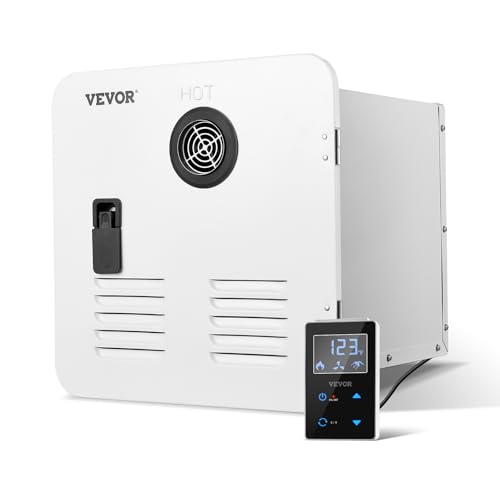
VEVOR 42,000 BTU Propane RV Tankless Water Heater
Best for: RVs needing propane heat and remote control
- Fuel Type
- Propane (what this guide is about)
- BTU
- 42,000 BTU
- Installation Location
- Outdoor
- Dimensions
- 15 x 15 inches
- Use
- RV
- Weight
- 26.9 pounds
View on Amazon: VEVOR 42,000 BTU Propane RV Tankless Water Heater Affiliate link
This VEVOR unit delivers 42,000 BTU of propane heat for instant hot water. It features segmented combustion technology to adjust temperatures for all seasons. The device includes an LED display, touch controls, and a remote controller for easy management. It measures 15 x 15 inches and weighs 26.9 pounds. This heater is designed for outdoor installation in most RVs. It also offers a dedicated outdoor water outlet for convenience.
Pros
- 42,000 BTU output for rapid heating
- Includes remote controller and LED display
- Segmented combustion adjusts to seasonal changes
- Dedicated outdoor water outlet included
Cons
- Limited to 42,000 BTU compared to higher models
- Requires 15 x 15 inch door opening
- Outdoor installation only
Good fit if
- You need propane power for your RV
- You want remote control capability
- You have a 15 x 15 inch door
Skip if
- You require natural gas or electric fuel
- You need indoor installation only
- You want higher than 42,000 BTU
Verdict: VEVOR 42000 BTU Propane RV Heater provides reliable instant heat with remote control. It fits RVs with standard 15 x 15 inch doors. It is ideal for users who prioritize propane fuel and outdoor utility outlets.

APUS 120,000 BTU Natural Gas Tankless Heater
Best for: Indoor multi-bathroom households
- Fuel Type
- Natural Gas (what this guide is about)
- Flow Rate
- 5.43 GPM
- BTU
- 120,000 BTU
- Installation Location
- Indoor
- Voltage
- 120V AC
- Temperature Control
- 95–149°F, ±1°F
View on Amazon: APUS 120,000 BTU Natural Gas Tankless Heater Affiliate link
This APUS unit delivers 120,000 BTU and up to 5.43 GPM for indoor natural gas heating. It supports three to four water points simultaneously. The LED touchscreen allows precise temperature control within ±1°F. Compact dimensions preserve floor space. Freeze protection and automatic shut-off add safety. It suits multi-person households needing reliable on-demand hot water.
Pros
- 120,000 BTU heating power
- 5.43 GPM flow rate
- LED touchscreen display
- Precise ±1°F temperature control
Cons
- Indoor installation only
- 120V AC power requirement
- 2-year warranty coverage
Good fit if
- You need high flow for multiple bathrooms
- You have indoor gas line access
- You want precise temperature settings
Skip if
- You require outdoor installation
- You need propane fuel
- You want a longer warranty
Verdict: APUS 120k BTU Natural Gas Indoor Heater fits homes needing strong flow for multiple simultaneous uses. It suits buyers with indoor gas access who value precise temperature control.
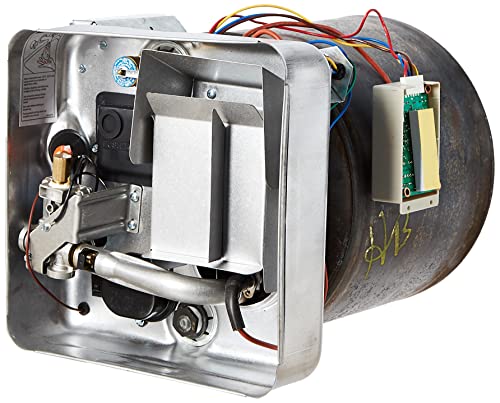
Suburban 6-Gallon Gas and Electric RV Water Heater
Best for: Small RVs needing flexible fuel options
- Fuel Type
- Electric (what this guide is about)
- BTU
- 12,000 BTU/h
- Wattage
- 1,440 W
- Capacity
- 6 Gallon
- Dimensions
- 12.69 x 12.69 x 19.19 in
- Use
- RV
View on Amazon: Suburban 6-Gallon Gas and Electric RV Water Heater Affiliate link
The Suburban SW6DE is a 6-gallon tank water heater for RVs. It uses Direct Spark Ignition propane with an optional 1,440-watt electric element. The porcelain-lined steel tank includes a replaceable anode rod for corrosion protection. Its compact 12.7-inch square design fits tight spaces. This unit offers dual fuel flexibility for campsite power or generator use.
Pros
- 6-gallon porcelain-lined steel tank for durability
- Dual fuel: propane DSI and optional 1,440W electric element
- Replaceable anode rod doubles as a drain
- Compact 12.7 x 12.7 x 19.19 inch footprint
Cons
- Small 6-gallon capacity limits simultaneous usage
- Lower 12,000 BTU output compared to other gas heaters
- Electric element is optional, not standard
Good fit if
- You need a compact heater for a small RV
- You want propane heating with electric backup options
- You prioritize tank durability and corrosion protection
Skip if
- You require high flow rates for multiple showers
- You need a standard 100,000+ BTU heater
- You prefer a tankless design over a tank
Verdict: Suburban 6-Gallon RV Water Heater suits small RVs needing reliable hot water with flexible fuel options. It fits buyers who value compact size and corrosion resistance over high capacity.
Specifications side by side
| Spec | APUS 68,000 BTU RV Propane Water Heater | Ranein 5.3 GPM Natural Gas Tankless Water Heater | Thermomate 6.5-Gallon Under-Sink Electric Mini-Tank | VEVOR 42,000 BTU Propane RV Tankless Water Heater | APUS 120,000 BTU Natural Gas Tankless Heater | Suburban 6-Gallon Gas and Electric RV Water Heater |
|---|---|---|---|---|---|---|
| Fuel Type | Propane | Natural Gas | Electric | Propane | Natural Gas | Electric, Gas |
| Flow Rate | 3.9 GPM | 5.3 GPM | not stated | not stated | 5.43 GPM | not stated |
| BTU | 68,000 BTU | 130,000 BTU | not stated | 42,000 BTU | 120,000 BTU | 12,000 BTU/h |
| Wattage | not stated | not stated | 1.44 kW | not stated | not stated | 1,440 W |
| Installation Location | not stated | Indoor | not stated | Outdoor | Indoor | not stated |
| Capacity | not stated | not stated | 6.5 Gallons | not stated | not stated | 6 Gallon |
| Voltage | 12V DC | not stated | 120V | not stated | 120V AC | not stated |
| Temperature Control | not stated | not stated | 50°F to 149°F | not stated | 95–149°F, ±1°F | not stated |
| Certification | CSA | not stated | UL Listed | not stated | not stated | not stated |
| Dimensions | 14.96 x 14.96 x 14.18 inches | 23.15 x 14.17 x 6.30 inches | 17.7"H x 17.7"W x 14.6"D | 15 x 15 inches | 20.55 x 13.27 x 5.91 inches | 12.69 x 12.69 x 19.19 in |
| Use | RV | Whole House | Under Sink | RV | not stated | RV |
| Weight | 24 pounds | 38 pounds | 26.5 pounds | 26.9 pounds | 19.2 pounds | 32.9 pounds |
| Color | White | Gray-NG | white,blue | White | Space Gray | Steel |
| Model | AP-AWH-RV10W-NEW | RH13K-NG | ES700 | TMRVQ-05010242 | AP-AWH-Q16NG | 5239A |
| Size | not stated | 5.3 GPM Indoor | 6.5 Gallon | 42000 BTU | not stated | 6 Gallon |
Frequently asked questions
Can I use propane for an RV tankless water heater?
Yes, propane is a common fuel for RV tankless heaters. The APUS 68,000 BTU RV Propane Water Heater is designed for this use. It offers a remote control for convenient operation. This setup fits RVers needing hot water without fixed utility lines.
Is natural gas better for whole-family hot water supply?
Natural gas units provide strong flow for whole-family needs. The Ranein 5.3 GPM Natural Gas Tankless Water Heater suits indoor installation. It delivers consistent hot water for multiple uses. This option works well for households with existing gas infrastructure and low altitude locations.
Do I need electric for a single sink?
Electric mini-tanks are practical for single sink point-of-use heating. The Thermomate 6.5-Gallon Under-Sink Electric Mini-Tank fits under sinks. It uses 120V power for localized heating. This solves handwashing or dish rinsing needs without requiring a new gas line installation.
What is the difference between propane and natural gas BTU ratings?
BTU ratings indicate heating power output. Higher numbers mean faster water heating. The APUS 120,000 BTU Natural Gas Heater offers strong flow for multi-bathroom homes. The APUS 68,000 BTU Propane RV Heater suits smaller RV spaces. Choose based on your simultaneous hot water demand.
Can an RV water heater use both gas and electric?
Some RV heaters offer flexible fuel options. The Suburban 6-Gallon Gas and Electric RV Water Heater supports this flexibility. It provides reliable hot water for small RVs. This unit values compact size and corrosion resistance over high capacity, fitting tight spaces effectively.
How important is the installation location for fuel type?
Installation location dictates fuel choice and unit size. Natural gas units like the Ranein model are for indoor use only. Propane units can often be installed outdoors or in RVs. The APUS 120,000 BTU Natural Gas Heater requires indoor gas access for safe operation.