Westinghouse or Takagi? Tankless Water Heaters Compared in 2026
As an Amazon Associate we earn from qualifying purchases. Links on this page are affiliate links.
When you search for westinghouse vs takagi tankless water heater options, you will find two distinct approaches to on-demand hot water. Both units provide endless hot water and save space by eliminating bulky storage tanks. The main difference lies in their energy source and placement. The Westinghouse model is an electric unit designed for indoor whole-house use, while the Takagi unit burns natural gas and is built specifically for outdoor installation.
Key differences
| Aspect | Westinghouse 24kW WiFi Tankless Water Heater | Takagi Outdoor 8 GPM Natural Gas Water Heater |
|---|---|---|
| Fuel Type | Electric | Natural Gas |
| Flow Rate | 5.55 GPM | 8 GPM |
| Installation Location | Indoor | Outdoor |
| Voltage | 240V | not listed |
| Venting Type | not listed | Condensing |
| Capacity | not listed | 8 Gallon |
Which one should you choose?
Choose Westinghouse 24kW WiFi Tankless Water Heater if
- You need a unit for indoor whole-house use.
- You want smart Wi-Fi control via an app.
- You have a 240V electrical setup with adequate amperage.
Choose Takagi Outdoor 8 GPM Natural Gas Water Heater if
- You require a higher flow rate of 8 GPM.
- You have an existing natural gas line and outdoor space.
- You want a condensing unit for high efficiency.
Verdict: Choose the Westinghouse if you need an indoor electric solution with smart features. Choose the Takagi if you have outdoor space and need higher flow rates powered by natural gas. Your choice depends entirely on your fuel source and installation location.
Westinghouse vs Takagi Key Specs
Fuel type
The Westinghouse unit is an electric model that runs on 240V power. It requires a dedicated electrical circuit with a 100A breaker and 8 AWG wire. This makes it suitable for homes with ample electrical capacity. The Takagi unit burns natural gas. It is designed for outdoor installation and uses gas lines instead of high-amperage electrical connections. Your choice depends on your available utility infrastructure. If you have natural gas and outdoor space, the Takagi is the clear option. If you only have electricity, the Westinghouse is your only choice here. Both provide on-demand hot water, but the energy source is fundamentally different.
Flow rate
Flow rate determines how many fixtures you can use at once. The Westinghouse electric heater delivers up to 5.55 gallons per minute. It starts heating water at a low flow of 0.79 GPM. This is sufficient for a bathroom and kitchen in a small apartment. The Takagi gas heater provides 8 gallons per minute. This higher output supports larger households or simultaneous use of multiple showers. The Takagi moves more water through the system. If you need high volume for a full house, the Takagi has the advantage. For smaller units, the Westinghouse capacity is adequate.
Installation location
Placement is a major decision point for these units. The Takagi is explicitly rated for outdoor installation. It is built to withstand weather conditions outside your home. This keeps the unit away from living spaces. The Westinghouse unit is designed for indoor use. Its compact size allows it to mount flush against a wall in a utility room, closet, or garage. It takes up zero floor space. You cannot install the Takagi inside due to ventilation and safety requirements. You must choose the Westinghouse if you need an indoor solution.
Smart features
Connectivity options differ between the two brands. The Westinghouse model includes built-in Wi-Fi. You can control it remotely via a smartphone app or use voice commands with Alexa and Google Home. This allows you to adjust temperature and monitor usage from anywhere. The Takagi data does not list any smart connectivity features. It relies on computerized safety features but lacks app integration. If you want to manage your hot water settings digitally, the Westinghouse offers this modern convenience. The Takagi focuses on mechanical efficiency instead.
Dimensions
Size matters for tight spaces. The Westinghouse unit measures 17.1 inches in height, 13 inches in width, and 4.3 inches in depth. It weighs 17 pounds. This slim profile fits easily into closets or under counters. The Takagi unit is larger, measuring 24.9 inches high, 17.8 inches wide, and 11.3 inches deep. It is heavier and bulkier. The Westinghouse is more compact. If you have limited space in a utility area, the Westinghouse fits better. The Takagi requires more clearance for outdoor mounting and maintenance access.
Which tankless water heater fits you
Renters needing smart home integration
You get WiFi connectivity for remote temperature adjustments via an app or voice commands. This electric unit offers 5.55 GPM flow at 24kW, fitting compactly at 17 by 13 inches. It mounts flush against walls, saving space in apartments while providing instant hot water for showers and sinks without bulky tanks.
Homes with outdoor gas hookups
This natural gas model delivers 8 GPM, higher than the electric alternative. Designed for outdoor installation, it features condensing technology for high efficiency. It meets ultra-low NOx emission standards and includes computerized safety features without a pilot light, making it ideal for dedicated outdoor spaces with gas lines.
Users prioritizing maximum hot water flow
You receive an 8 GPM flow rate, supporting multiple simultaneous uses like showers and laundry. The natural gas fuel type provides consistent heating power. Its outdoor design and compact footprint of 24.9 by 17.8 inches allow for flexible placement while ensuring endless hot water for larger households with high demand.
The products compared
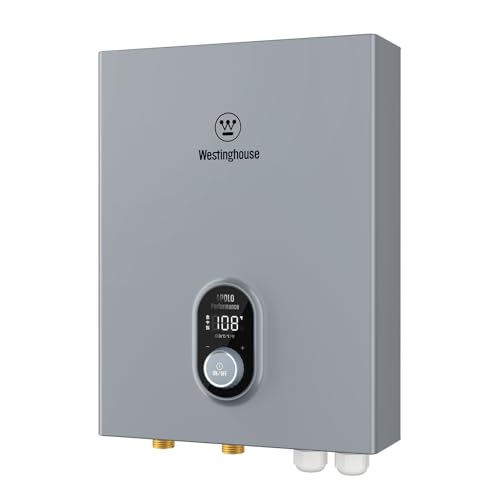
Westinghouse 24kW WiFi Tankless Water Heater
Best for: Whole-house electric hot water with smart control
- Fuel Type
- Electric
- Flow Rate
- Max 5.55 GPM
- Wattage
- 24 kW
- Voltage
- 240V
- Certification
- ETL
- Dimensions
- 17" x 13" x 4.3"
View on Amazon: Westinghouse 24kW WiFi Tankless Water Heater Affiliate link
This Westinghouse 24kW electric tankless water heater delivers up to 5.55 GPM at 240V. It features smart Wi-Fi control for remote temperature adjustments and voice commands via Alexa or Google Home. The compact 17 x 13 x 4.3-inch unit mounts flush to the wall. It is designed for whole-house use in apartments or homes, requiring a 100A breaker and 8 AWG wire for installation.
Pros
- 24kW power output provides up to 5.55 GPM flow rate
- Built-in Wi-Fi allows remote monitoring and temperature control
- Compact 17 x 13 x 4.3-inch size saves space
- Compatible with Alexa and Google Home voice commands
Cons
- Requires a dedicated 100A breaker and 8 AWG wiring
- Electric model lacks the high efficiency of condensing gas units
- Heavier build at 17 pounds compared to smaller units
Good fit if
- You need smart app control for your water heater
- You have the electrical capacity for a 100A breaker
- You want a compact unit for a whole-house setup
Skip if
- You are looking for a natural gas powered unit
- You cannot install a 100A electrical circuit
- You prefer a non-condensing gas heater for outdoor use
Verdict: Westinghouse 24kW Electric Tankless Heater fits homes with strong electrical infrastructure that value smart connectivity. It offers reliable whole-house hot water with modern app control.
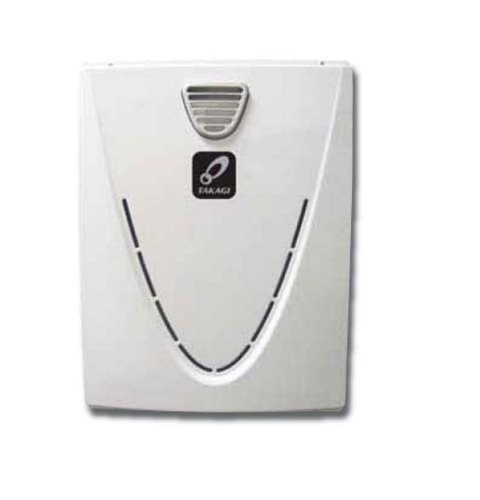
Takagi Outdoor 8 GPM Natural Gas Water Heater
Best for: outdoor whole-house natural gas heating
- Fuel Type
- Natural Gas
- Flow Rate
- 8 GPM
- Installation Location
- Outdoor
- Dimensions
- 24.9 x 17.8 x 11.3 inches
- Venting Type
- Condensing
- Capacity
- 8 Gallon
View on Amazon: Takagi Outdoor 8 GPM Natural Gas Water Heater Affiliate link
This outdoor unit delivers 8 GPM of hot water using natural gas. It features condensing technology for high efficiency and ultra-low NOx emissions. The compact white design fits small spaces. It suits homes needing reliable whole-house heating in mild climates. The lack of indoor venting complexity makes installation straightforward for exterior walls.
Pros
- 8 GPM flow rate for whole-house use
- Condensing high-efficiency design
- Ultra-low NOx emissions compliance
- No pilot light required
Cons
- Outdoor installation only
- Natural gas fuel type required
- No smart connectivity features listed
Good fit if
- You need high flow rate for multiple fixtures
- You have an exterior wall for installation
- You want ultra-low emission compliance
Skip if
- You require indoor installation
- You use propane or electric power
- You need remote app control
Verdict: Takagi T-H3S Outdoor Gas Heater provides strong 8 GPM output for whole-house needs. It is best for exterior installations where high efficiency and low emissions matter.
Specifications side by side
| Spec | Westinghouse 24kW WiFi Tankless Water Heater | Takagi Outdoor 8 GPM Natural Gas Water Heater |
|---|---|---|
| Fuel Type | Electric | Natural Gas |
| Flow Rate | Max 5.55 GPM | 8 GPM |
| Wattage | 24 kW | not stated |
| Installation Location | not stated | Outdoor |
| Voltage | 240V | not stated |
| Certification | ETL | not stated |
| Dimensions | 17" x 13" x 4.3" | 24.9 x 17.8 x 11.3 inches |
| Use | Whole House | not stated |
| Venting Type | not stated | Condensing |
| Capacity | not stated | 8 Gallon |
| Features | WiFi | not stated |
| Weight | 17 pounds | not stated |
| Size | L-24 | Medium |
| Color | Gray 24 | White |
| Model | WET-24K-G | T-H3S-OS-N |
Frequently asked questions
Is Westinghouse or Takagi better for whole-house electric hot water?
Westinghouse is the better choice for electric whole-house needs. Its 24kW model provides 5.55 GPM flow, which supports multiple fixtures simultaneously. It features WiFi connectivity for remote control, making it ideal for homes with strong electrical infrastructure and smart home integration.
Can Takagi be installed outdoors while Westinghouse cannot?
Yes, the Takagi T-H3S is designed for outdoor installation. It features condensing venting and is built to withstand exterior conditions. The Westinghouse unit is an indoor electric model that requires a dedicated 240V circuit and does not have outdoor-rated housing.
Which tankless heater has higher flow rate for gas?
The Takagi natural gas model offers an 8 GPM output. This high flow rate supports whole-house demand for gas-powered systems. The Westinghouse electric unit provides 5.55 GPM, which is lower but sufficient for compact homes or apartments with limited water usage.
Does Westinghouse require a gas line for operation?
No, the Westinghouse 24kW heater runs entirely on electricity. It requires a 240V power source and a 100A breaker. You do not need a gas line or venting for this unit, unlike the Takagi model which uses natural gas and condensing venting.
How do the sizes compare between these two brands?
The Westinghouse unit is 17.1 inches high, 13 inches wide, and 13 inches long. It weighs 17 pounds. The Takagi is taller at 24.9 inches high, 17.8 inches wide, and 11.3 inches long. Both are compact compared to traditional storage tanks.
Is WiFi control available on the Takagi outdoor model?
The provided data does not list WiFi connectivity for the Takagi T-H3S outdoor gas heater. The Westinghouse 24kW electric model explicitly includes WiFi features for app or voice control. You should verify smart capabilities separately for the Takagi unit if remote access is essential.