Westinghouse or Electrolux? Tankless Water Heaters Compared in 2026
As an Amazon Associate we earn from qualifying purchases. Links on this page are affiliate links.
You are comparing westinghouse vs electrolux tankless water heater options, but the data reveals a fundamental mismatch. Both brands offer electric heating, yet their product types differ significantly. The Westinghouse unit is a whole-house tankless heater designed for continuous hot water. The Electrolux unit is a small, under-sink tank heater. You need to decide if you need endless supply or point-of-use convenience.
Key differences
| Aspect | Westinghouse 24kW WiFi Tankless Water Heater | Electrolux 1.5 Gal 120V Under Sink Heater |
|---|---|---|
| Heater Type | Tankless | Tank (1.5 Gallon) |
| Use Case | Whole House | Under Sink |
| Voltage | 240V | 120V |
| Wattage | 24kW | not listed |
| Flow Rate | 5.55 GPM | not listed |
| Connectivity | WiFi | not listed |
Which one should you choose?
Choose Westinghouse 24kW WiFi Tankless Water Heater if
- You need hot water for multiple fixtures simultaneously.
- You have 240V electrical capacity available.
- You want to monitor temperature via an app.
Choose Electrolux 1.5 Gal 120V Under Sink Heater if
- You only need hot water for a single sink.
- You want to plug the unit into a standard outlet.
- You need a compact unit for tight spaces.
Verdict: Choose the Westinghouse if you require a whole-house solution with high flow rates and smart features. Select the Electrolux if you only need a small, plug-in heater for a specific sink. These products serve entirely different needs.
Westinghouse vs Electrolux Heater Comparison
Heating Type
You are comparing two distinct electric heating technologies. The Westinghouse model is a true tankless unit, providing instant hot water on demand without a storage vessel. It heats water as it flows through the system. In contrast, the Electrolux unit is a small tank heater. It stores 1.5 gallons of water in an insulated tank to keep it ready for use. This means the Electrolux unit relies on stored heat energy, while the Westinghouse unit generates heat continuously. This fundamental difference affects how you get your hot water and how the units manage energy efficiency during periods of non-use.
Capacity
These products serve very different capacity needs. The Westinghouse tankless heater delivers up to 5.55 gallons per minute (GPM) of hot water. This flow rate supports whole-house usage, allowing you to run a shower and sink simultaneously without running out of hot water. The starting flow rate is just 0.79 GPM. The Electrolux unit has a fixed capacity of 1.5 gallons. It does not provide a continuous flow rate because it is a storage tank. Once the 1.5 gallons are used, you must wait for the tank to reheat. The Westinghouse unit is designed for high-volume, continuous supply, while the Electrolux is limited by its small storage size.
Voltage
The electrical requirements for these units are quite different. The Westinghouse heater requires a 240V power supply. It draws up to 100A of current and needs three 40-amp double-pole breakers with 8 AWG wire for proper installation. This indicates a high-power dedicated circuit is necessary. The Electrolux unit operates on standard 120V power. It includes a 3.6-foot power cord and plugs directly into a standard outlet. This makes the Electrolux unit much easier to install in locations without high-voltage wiring. If you do not have 240V available, the Electrolux option is the only viable choice for your electrical setup.
Installation
Installation methods differ significantly between the two. The Westinghouse unit measures 17 inches high by 13 inches wide and 4.3 inches deep. It mounts flush against the wall to save floor space. You need 3/4-inch NPT water connections and the high-voltage electrical setup mentioned earlier. The Electrolux unit is even more compact, measuring 10.1 inches by 12.3 inches. It is designed for under-sink installation in tight spaces like kitchens, bathrooms, or RVs. The Electrolux unit includes a power cord for plug-in use, requiring no special wiring or gas lines. The Westinghouse unit requires professional electrical work, while the Electrolux unit allows for simple DIY plug-in setup.
Smart Features
Only one of these units offers smart home integration. The Westinghouse heater includes built-in Wi-Fi connectivity. You can use a dedicated app to remotely adjust the temperature and monitor usage from anywhere. It also supports voice control via Alexa and Google Home, allowing you to control the heater with simple voice commands. This feature is ideal for modern smart homes where convenience and remote monitoring are priorities. The Electrolux unit does not list any Wi-Fi, app, or voice control capabilities. It operates as a standard electric tank heater with manual controls. If remote management is important to you, the Westinghouse unit is the superior choice.
Which tankless heater fits your needs
Whole house hot water demand
You need continuous hot water for multiple fixtures. This 24kW unit delivers up to 5.55 GPM at 240V. It supports simultaneous shower and sink use. The 17x13x4.3 inch frame mounts flush. WiFi control lets you adjust settings remotely via app or voice commands for convenient whole-home management.
Under sink point of use
You need a compact heater for a single sink. This 1.5-gallon unit plugs into standard 120V outlets. It measures just 10.1x12.3 inches for tight spaces. CSA certification ensures safety with overheat protection. The included 3.6 ft cord allows easy DIY installation without special wiring or high-voltage connections.
Smart home integration
You want remote temperature control and usage monitoring. This model features built-in WiFi for app access. You can also use voice commands with Alexa or Google Home. The 24kW heating element provides instant hot water on demand. Smart features integrate seamlessly into modern home automation systems for effortless daily operation.
The products compared
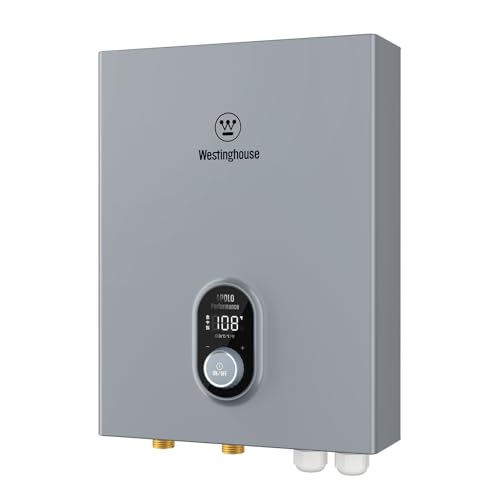
Westinghouse 24kW WiFi Tankless Water Heater
Best for: Whole-house hot water with smart control
- Fuel Type
- Electric
- Flow Rate
- Max 5.55 GPM
- Wattage
- 24 kW
- Voltage
- 240V
- Certification
- ETL
- Dimensions
- 17" x 13" x 4.3"
View on Amazon: Westinghouse 24kW WiFi Tankless Water Heater Affiliate link
This Westinghouse unit delivers 24kW of power at 240V, providing up to 5.55 GPM of instant hot water. It measures 17.1 by 13 by 4.3 inches and weighs 17 pounds. The device includes smart Wi-Fi for remote temperature adjustments via an app or voice commands. It requires three 40-amp breakers and 8-gauge wire. This whole-house heater suits homes needing continuous hot water for multiple fixtures.
Pros
- 24kW output supports up to 5.55 GPM flow rate
- Smart Wi-Fi enables remote control via app and voice
- Compact 4.3-inch depth saves wall space
- Low 0.79 GPM starting flow rate for efficiency
Cons
- Requires three 40-amp double-pole breakers
- Needs 8-gauge wiring for installation
- Lacks visible temperature display
Good fit if
- You have the electrical capacity for three 40-amp breakers
- You want remote temperature control via an app
- You need a whole-house heater for multiple bathrooms
Skip if
- You only have a single 40-amp circuit available
- You prefer gas-powered heating systems
- You need a unit with a built-in digital display
Verdict: Westinghouse 24kW Electric Tankless Water Heater provides high flow rates for whole-house use. It fits buyers with robust electrical infrastructure who value smart home integration.

Electrolux 1.5 Gal 120V Under Sink Heater
Best for: Single sink hot water needs
- Fuel Type
- Electric
- Capacity
- 1.5 Gallon
- Voltage
- 120V
- Certification
- CSA
- Dimensions
- 10.1 x 12.3 in
- Use
- RV, Under Sink
View on Amazon: Electrolux 1.5 Gal 120V Under Sink Heater Affiliate link
This Electrolux unit is a 1.5-gallon electric tank designed for under-sink use. It runs on 120V and plugs into a standard outlet, making DIY installation simple. The compact 10.1 x 12.3-inch size fits tight spaces. It includes CSA certification and overheat protection. This mini tank suits kitchens or bathrooms where you need immediate hot water without complex wiring.
Pros
- 120V plug-in design requires no special wiring
- Compact 10.1 x 12.3-inch dimensions fit under most sinks
- CSA certified with overheat protection for safety
- 6-year tank warranty included
Cons
- 1.5-gallon capacity is limited to point-of-use applications
- Not suitable for whole-house hot water needs
- Requires standard 120V outlet availability
Good fit if
- You need hot water for a single sink or small appliance
- You want a DIY-friendly plug-in installation without electrician costs
- You have limited space under the sink
Skip if
- You need to supply hot water to multiple fixtures simultaneously
- You require a high-flow rate for showers or tubs
- You do not have a standard 120V outlet nearby
Verdict: Electrolux 1.5 Gal Under Sink Water Heater is a practical solution for single-sink hot water needs. It fits buyers who want easy plug-in installation and compact storage in tight spaces.
Specifications side by side
| Spec | Westinghouse 24kW WiFi Tankless Water Heater | Electrolux 1.5 Gal 120V Under Sink Heater |
|---|---|---|
| Fuel Type | Electric | Electric |
| Flow Rate | Max 5.55 GPM | not stated |
| Wattage | 24 kW | not stated |
| Capacity | not stated | 1.5 Gallon |
| Voltage | 240V | 120V |
| Certification | ETL | CSA |
| Dimensions | 17" x 13" x 4.3" | 10.1 x 12.3 in |
| Use | Whole House | RV, Under Sink |
| Features | WiFi | not stated |
| Weight | 17 pounds | not stated |
| Size | L-24 | not stated |
| Color | Gray 24 | 1.5 Gallon |
| Model | WET-24K-G | EES015 |
Frequently asked questions
Can I use the Westinghouse unit for a whole house?
Yes, the Westinghouse 24kW model is designed for whole-house hot water. It provides high flow rates suitable for multiple fixtures. The unit operates on 240V power. It includes WiFi connectivity for smart control. This makes it a practical choice for continuous hot water demand throughout your home.
Is the Electrolux heater suitable for a single sink?
Yes, the Electrolux 1.5 Gal unit is ideal for single-sink needs. It is an under-sink water heater with a compact design. The device runs on 120V power for easy installation. Its small footprint fits in tight spaces. It provides hot water on demand for one specific fixture.
What is the size difference between these two heaters?
The Westinghouse unit measures 17.1 inches in height and weighs 17 pounds. The Electrolux model is smaller, standing 12.3 inches tall. The Westinghouse unit is a larger tankless system. The Electrolux unit is a small 1.5-gallon storage heater. Their physical dimensions reflect their different intended uses.
Do both heaters require the same electrical voltage?
No, they use different electrical voltages. The Westinghouse heater requires 240V power. The Electrolux heater operates on 120V power. This difference affects installation requirements. You must ensure your electrical infrastructure supports the specific voltage needed for each unit.
Which heater offers smart home integration?
The Westinghouse 24kW model offers WiFi features. This allows you to control the heater remotely. The Electrolux unit does not list smart features. It is a standard under-sink heater. If you value remote monitoring, the Westinghouse option is the better choice.
Is the Electrolux unit a true tankless heater?
No, the Electrolux unit is not a true tankless heater. It is a 1.5-gallon under-sink water heater. It stores hot water in a small vessel. The Westinghouse model is a true tankless unit. It heats water instantly as it flows through.
Which model is better for simultaneous use?
The Westinghouse 24kW model is better for simultaneous use. It is designed for whole-house hot water demand. It supports multiple fixtures running at once. The Electrolux unit is for a single sink only. It cannot support simultaneous use across different areas of your home.
What is the model number for the Westinghouse heater?
The model number for the Westinghouse heater is WET-24K-G. It is a 24kW electric tankless water heater. The unit features WiFi connectivity. It is designed for whole-house applications. This specific model provides high flow rates for continuous hot water.