Takagi T-H3S-OS-N Condensing High Efficiency vs Takagi T-H3J-OS-P Condensing High Efficiency Propane Outdoor Tankless Water Heater: Spec Comparison
As an Amazon Associate we earn from qualifying purchases. Links on this page are affiliate links.
You are comparing the takagi t h3s os n condensing high efficiency vs t h3j os p condensing models. Both units are outdoor, condensing tankless water heaters designed for high efficiency. They share identical physical dimensions and computerized safety features. The main difference lies in their fuel source and water delivery. One uses natural gas for higher flow, while the other runs on propane with a lower output. Your choice depends on your available fuel line and hot water needs.
Key differences
| Aspect | Takagi Outdoor 8 GPM Natural Gas Water Heater | Takagi 6.6 GPM Propane Outdoor Heater |
|---|---|---|
| Fuel Type | Natural Gas | Propane |
| Flow Rate | 8 GPM | 6.6 GPM |
| Capacity | 8 Gallon | 4.0 Gallons |
| Weight | not listed | 52 pounds |
Which one should you choose?
Choose Takagi Outdoor 8 GPM Natural Gas Water Heater if
- You have a natural gas line available for installation.
- You need a higher flow rate of 8 gallons per minute for multiple simultaneous uses.
Choose Takagi 6.6 GPM Propane Outdoor Heater if
- You rely on propane as your primary fuel source.
- You prefer a unit with a listed weight of 52 pounds for mounting considerations.
Verdict: Choose the T-H3S-OS-N if you have natural gas and need the higher 8 GPM output. Select the T-H3J-OS-P if your home uses propane or if the lower flow rate meets your household's hot water demand. Both models offer the same compact, condensing efficiency for outdoor use.
Spec Comparison of Two Takagi Models
Fuel Type
The Takagi T-H3S-OS-N uses natural gas, while the Takagi T-H3J-OS-P runs on propane. This is the primary distinction between the two units. You must ensure your home has the correct fuel line infrastructure before choosing. Natural gas models connect to municipal gas lines, whereas propane models require a tank supply. Both units are built for outdoor use and share the same condensing technology, but the fuel source dictates which one fits your existing setup. Check your current gas supply type carefully to avoid installation issues.
Flow Rate
Flow rate determines how much hot water you can draw simultaneously. The T-H3S-OS-N delivers 8 gallons per minute (GPM). The T-H3J-OS-P provides 6.6 GPM. If you need to run multiple showers or appliances at once, the higher flow rate of the natural gas model is advantageous. The propane unit may struggle to maintain temperature during high-demand scenarios. For smaller households or single-bathroom setups, both rates are likely sufficient. However, for larger families requiring simultaneous hot water use, the 8 GPM output offers more capacity and flexibility for everyday tasks.
Dimensions
Both heaters share identical physical dimensions. Each unit measures 24.9 inches in height, 17.8 inches in width, and 11.3 inches in length. This means they occupy the same amount of wall space in your outdoor installation area. You do not need to adjust your mounting bracket or enclosure size when switching between these models. The compact footprint is typical for condensing tankless units. This consistency simplifies the planning process, as the physical space required remains constant regardless of whether you choose the natural gas or propane version.
Capacity
Internal capacity differs between the two models. The T-H3S-OS-N lists a capacity of 8 gallons. The T-H3J-OS-P lists a capacity of 4.0 gallons. While tankless heaters provide endless hot water, internal capacity can influence thermal mass and recovery speed. The larger internal volume in the natural gas model may handle sudden temperature fluctuations slightly better. However, for steady-state operation, both units provide continuous hot water. This spec is less critical than flow rate for most users, but it remains a distinct difference in the internal design of each unit.
Venting Type
Both units utilize condensing venting technology. This allows for high efficiency by extracting heat from exhaust gases. You can use PVC venting for both models, which simplifies installation compared to traditional metal venting. The venting requirements are similar because both are condensing units. This efficiency rating helps reduce energy costs. You do not need specialized stainless steel vents for either model. The shared venting type means your existing venting infrastructure might work for either unit, provided it is rated for condensing appliances. This is a key advantage for both products in terms of installation flexibility.
Which Takagi Model Fits Your Home
Home with existing natural gas line
You already have natural gas infrastructure. This unit delivers 8 GPM, providing more hot water simultaneously than the propane model. It runs on natural gas and fits outdoor spaces with the same compact footprint as the other option. The flow rate supports multiple bathrooms better.
Property with propane supply only
Your home uses propane fuel. This model is designed specifically for that gas type. It provides 6.6 GPM of hot water. The dimensions are identical to the natural gas version, so it fits in the same outdoor space. It meets the same ultra-low NOx emission standards.
User needing maximum flow rate
You need the highest possible flow rate for your household. The natural gas unit offers 8 GPM compared to 6.6 GPM for the propane model. Both units share the same compact outdoor design and condensing efficiency. The higher flow rate allows for greater simultaneous use of fixtures.
The products compared
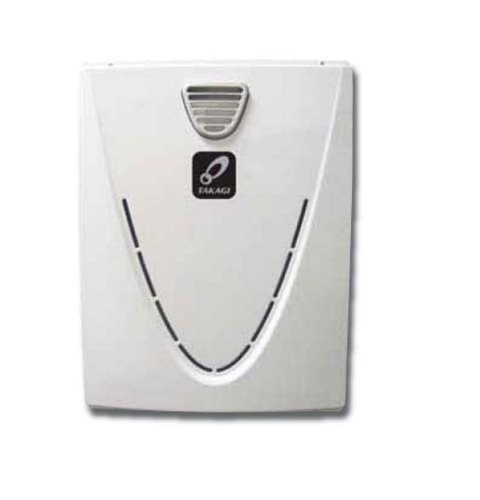
Takagi Outdoor 8 GPM Natural Gas Water Heater
Best for: High-flow outdoor natural gas needs
- Fuel Type
- Natural Gas
- Flow Rate
- 8 GPM
- Installation Location
- Outdoor
- Dimensions
- 24.9 x 17.8 x 11.3 inches
- Venting Type
- Condensing
- Capacity
- 8 Gallon
View on Amazon: Takagi Outdoor 8 GPM Natural Gas Water Heater Affiliate link
This unit delivers 8 gallons per minute of hot water using natural gas. It features a condensing design for high efficiency and ultra-low NOx emissions. The outdoor model measures 24.9 by 17.8 by 11.3 inches. It includes computerized safety features and eliminates the need for a pilot light. You get endless hot water in a compact, space-saving form.
Pros
- 8 GPM flow rate
- Condensing high efficiency
- Ultra-low NOx emissions
- No pilot light needed
Cons
- Natural gas only
- Outdoor installation required
- Larger footprint than indoor models
Good fit if
- You need high flow for multiple fixtures
- You have outdoor venting space
- You want ultra-low emissions
Skip if
- You use propane
- You need indoor installation
- You require a compact indoor unit
Verdict: Takagi 8 GPM Outdoor Natural Gas Heater suits homes needing high flow outdoors. It delivers efficient hot water with low emissions for outdoor setups.

Takagi 6.6 GPM Propane Outdoor Heater
Best for: Outdoor propane users needing high flow
- Fuel Type
- Propane
- Flow Rate
- 6.6 GPM
- Installation Location
- Outdoor
- Dimensions
- 24.9 x 17.8 x 11.3 in
- Venting Type
- Condensing
- Capacity
- 4.0 Gallons
View on Amazon: Takagi 6.6 GPM Propane Outdoor Heater Affiliate link
This Takagi unit is a condensing tankless water heater designed for outdoor installation. It runs on propane and delivers 6.6 gallons per minute. The compact white casing measures 24.9 by 17.8 by 11.3 inches and weighs 52 pounds. It meets strict ultra-low NOx emission standards. You get endless hot water without a pilot light. This model suits homes needing high flow rates in outdoor settings.
Pros
- High 6.6 GPM flow rate
- Condensing technology for high efficiency
- Meets 2012 SCAQMD Rule 1146.2 emissions
- No pilot light required
Cons
- Propane fuel type limits location options
- Outdoor installation only
- Larger physical footprint than compact models
Good fit if
- You need a high-flow outdoor water heater
- You have a propane supply available
- You require ultra-low NOx emissions compliance
Skip if
- You need indoor installation only
- You prefer natural gas over propane
- You require a compact indoor unit
Verdict: Takagi Propane Outdoor Tankless Heater offers high efficiency and strong flow for outdoor propane setups. It fits users needing strict emissions compliance and reliable endless hot water in outdoor locations.
Specifications side by side
| Spec | Takagi Outdoor 8 GPM Natural Gas Water Heater | Takagi 6.6 GPM Propane Outdoor Heater |
|---|---|---|
| Fuel Type | Natural Gas | Propane |
| Flow Rate | 8 GPM | 6.6 GPM |
| Installation Location | Outdoor | Outdoor |
| Dimensions | 24.9 x 17.8 x 11.3 inches | 24.9 x 17.8 x 11.3 in |
| Venting Type | Condensing | Condensing |
| Capacity | 8 Gallon | 4.0 Gallons |
| Weight | not stated | 52 pounds |
| Size | Medium | Medium |
| Color | White | White |
| Model | T-H3S-OS-N | T-H3J-OS-P |
Frequently asked questions
What are the physical dimensions of the Takagi T-H3S-OS-N and T-H3J-OS-P?
Both units measure 17.8 inches in width, 24.9 inches in height, and 11.3 inches in length. They share identical footprints, allowing for easy swap-out in existing outdoor installations. The propane model weighs 52 pounds. The natural gas model weight is not specified in the data. Their compact size suits tight outdoor spaces.
Can these tankless heaters be installed in any outdoor location?
Yes, both the T-H3S-OS-N and T-H3J-OS-P are designed specifically for outdoor installation. They are built to withstand outdoor conditions. You do not need to worry about indoor ventilation requirements. Their condensing design allows for efficient operation in exterior settings without complex venting modifications.
Is there a difference in flow rate between the natural gas and propane models?
Yes, the natural gas model delivers 8 gallons per minute. The propane model provides a lower flow rate. This difference matters if you need to run multiple showers or appliances simultaneously. The higher GPM of the natural gas unit supports greater concurrent hot water demand for larger households.
Do these models use condensing technology for efficiency?
Both units utilize condensing technology. This method captures heat from exhaust gases to preheat incoming water. It results in high efficiency and low emissions. You benefit from reduced energy waste. This feature is standard across both the natural gas and propane versions in this series.
What color are these Takagi outdoor water heaters?
Both the T-H3S-OS-N and T-H3J-OS-P are white. This neutral color helps them blend into most exterior wall backgrounds. The finish is designed for outdoor durability. You can expect a consistent aesthetic regardless of which fuel type you choose for your home.
Which model is better for a home with existing propane lines?
The T-H3J-OS-P is the correct choice if you have propane infrastructure. It is specifically engineered to run on propane fuel. Using the wrong fuel type can damage the unit. This model ensures safe and efficient operation with your existing propane supply and outdoor setup.
Are these units suitable for high-flow outdoor needs?
Yes, both models are rated for high-flow outdoor applications. The natural gas version offers up to 8 GPM. The propane model provides strong flow for typical outdoor demands. They are built to deliver endless hot water. This makes them ideal for homes requiring reliable performance in exterior locations.