Rinnai vs Takagi Tankless Water Heaters: Which Brand Fits You?
As an Amazon Associate we earn from qualifying purchases. Links on this page are affiliate links.
When you compare a rinnai vs takagi tankless water heater, you see two strong condensing options. Both units deliver on-demand hot water with high efficiency. The Rinnai model offers dual-fuel flexibility and higher flow rates, while the Takagi unit is designed strictly for outdoor natural gas use. You need to check your fuel source and installation space to decide which fits your home better.
Key differences
| Aspect | Rinnai 11.1 GPM Condensing Dual-Fuel Water Heater | Takagi Outdoor 8 GPM Natural Gas Water Heater |
|---|---|---|
| Flow Rate | 11.1 GPM | 8 GPM |
| Fuel Type | Propane or Natural Gas | Natural Gas |
| Installation Location | Indoor or Outdoor | Outdoor only |
| Dimensions | 30.1 x 18.5 x 30.1 inches | 24.9 x 17.8 x 11.3 inches |
Which one should you choose?
Choose Rinnai 11.1 GPM Condensing Dual-Fuel Water Heater if
- You need a higher flow rate for multiple simultaneous fixtures.
- You want the flexibility to use either propane or natural gas.
- You plan to install the unit indoors or in a versatile outdoor location.
Choose Takagi Outdoor 8 GPM Natural Gas Water Heater if
- You have a dedicated outdoor space with natural gas access.
- You prefer a narrower footprint that is only 11.3 inches deep.
- You want a unit that meets ultra-low NOx emission standards.
Verdict: Choose the Rinnai if you need maximum hot water capacity and fuel flexibility for various installation spots. Pick the Takagi if you have limited outdoor space and only use natural gas. Both provide efficient, endless hot water through condensing technology.
Rinnai vs Takagi: Key Specs
Flow rate capacity
The Rinnai RX199iN delivers 11.1 GPM, supporting up to seven fixtures simultaneously. This higher flow rate suits larger households with multiple simultaneous demands. The Takagi T-H3S-OS-N provides 8 GPM. While sufficient for many homes, it handles fewer concurrent uses than the Rinnai. If you need maximum hot water volume for large baths or multiple showers, the Rinnai offers a clear advantage in capacity. The Takagi is adequate for standard usage but lacks the higher output of its competitor.
Fuel type flexibility
The Rinnai RX199iN features a Smart Sense gas control system that allows it to run on either propane or natural gas. This dual-fuel capability provides installation flexibility if you switch fuel sources or have limited gas line options. The Takagi T-H3S-OS-N is designed strictly for natural gas. It does not support propane. If your home uses propane or you want the option to switch fuels later, the Rinnai is the better choice. The Takagi is limited to natural gas only.
Installation location
The Rinnai RX199iN is rated for both indoor and outdoor installation. Its Versa Vent system allows for versatile placement, provided you use the correct vent cap for outdoor setups. The Takagi T-H3S-OS-N is designated for outdoor use only. It cannot be installed inside a garage or utility room. If you need to place the unit indoors to save exterior space or protect it from weather, the Rinnai is the only viable option. The Takagi requires an outdoor mounting location.
Physical dimensions
The Rinnai RX199iN measures 30.1 x 18.5 x 30.1 inches and weighs 55 pounds. It is taller and deeper than the Takagi. The Takagi T-H3S-OS-N measures 24.9 x 17.8 x 11.3 inches. It is significantly more compact, especially in depth. If you have limited wall space or need a unit that fits into a tighter enclosure, the Takagi’s smaller footprint is advantageous. The Rinnai requires more clearance and space due to its larger chassis.
Energy efficiency
The Rinnai RX199iN has a Uniform Energy Factor (UEF) of .98. This indicates very high efficiency in converting fuel to hot water. The Takagi T-H3S-OS-N is described as a high-efficiency condensing unit and meets ultra-low NOx emission standards. However, its specific UEF rating is not provided in the data. Without a published UEF number for the Takagi, we cannot directly compare their efficiency scores. Both are condensing models, but the Rinnai’s specific efficiency metric is higher.
Warranty coverage
The Rinnai RX199iN offers a limited 15-year warranty on the heat exchanger, 5 years on parts, and 5 years on labor. Labor coverage requires registration within 90 days. The Takagi T-H3S-OS-N warranty details are not listed in the provided data. We cannot compare the length or terms of the warranties. If warranty length is a priority, the Rinnai’s published terms are robust. The Takagi’s coverage remains unknown based on the available specifications.
Choose the Right Unit for Your Home
Large households needing high flow rates
You need consistent hot water for seven fixtures. This Rinnai model delivers 11.1 GPM to handle simultaneous demand. Its dual-fuel capability lets you choose propane or natural gas. The compact size fits tight spaces while providing powerful performance for busy homes with multiple bathrooms.
Outdoor installers with natural gas supply
This unit is designed strictly for outdoor placement. It runs on natural gas and meets ultra-low emission standards. The compact dimensions save space on your exterior wall. If your home has natural gas and limited indoor space, this dedicated outdoor unit offers a straightforward, efficient solution.
Users wanting flexible fuel options
You value the ability to switch between propane and natural gas. This Rinnai heater supports both fuels with its Smart Sense control. It works indoors or outdoors with the right venting. This flexibility ensures you can adapt to your local fuel availability without changing your water heating strategy.
The products compared

Rinnai 11.1 GPM Condensing Dual-Fuel Water Heater
Best for: High-flow homes needing indoor or outdoor flexibility
- Fuel Type
- Natural Gas or Propane
- Flow Rate
- 11.1 GPM
- BTU
- 199k BTU
- Installation Location
- Indoor/Outdoor
- Venting Type
- Condensing
- Dimensions
- 30.1 × 18.5 × 30.1 inches
View on Amazon: Rinnai 11.1 GPM Condensing Dual-Fuel Water Heater Affiliate link
The Rinnai RX199iN delivers 11.1 GPM of hot water using natural gas or propane. Its condensing design achieves a .98 UEF for high efficiency. You can install it indoors or outdoors with the right venting. The unit measures 30.1 x 18.5 x 30.1 inches and weighs 55 pounds. It suits homes needing high flow rates for multiple fixtures.
Pros
- 11.1 GPM flow rate supports up to 7 fixtures
- Condensing design with .98 UEF efficiency rating
- Indoor and outdoor installation flexibility
- Smart Sense gas control works with propane or natural gas
Cons
- Requires RX-OVC vent cap for outdoor use
- WiFi Controlr module sold separately
- Labor warranty drops to 1 year if not registered within 90 days
Good fit if
- You need high flow for multiple simultaneous uses
- You want a high-efficiency condensing unit
- You need indoor or outdoor flexibility
Skip if
- You already have a Controlr module installed
- You cannot register the product within 90 days
- You need a lower flow rate model
Verdict: Rinnai RX199iN 11.1 GPM Condensing Heater offers high efficiency and flexible placement for busy households. It fits homes with high hot water demands and access to gas or propane.
Takagi Outdoor 8 GPM Natural Gas Water Heater
Best for: outdoor high-flow natural gas needs
- Fuel Type
- Natural Gas
- Flow Rate
- 8 GPM
- Installation Location
- Outdoor
- Dimensions
- 24.9 x 17.8 x 11.3 inches
- Venting Type
- Condensing
- Capacity
- 8 Gallon
View on Amazon: Takagi Outdoor 8 GPM Natural Gas Water Heater Affiliate link
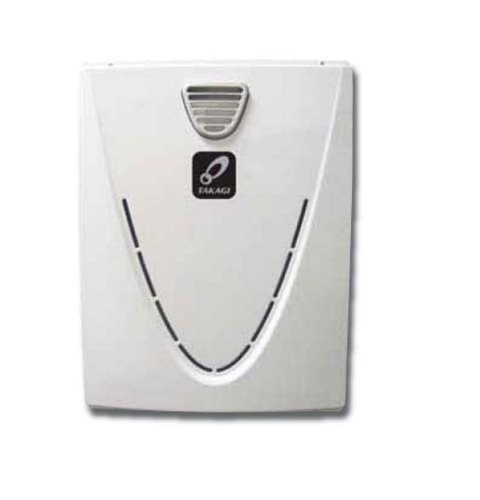
This Takagi unit delivers 8 GPM of hot water using natural gas. It is designed for outdoor installation and features condensing technology for high efficiency. The compact white casing measures 24.9 by 17.8 by 11.3 inches. It meets strict ultra-low NOx emission standards. You get on-demand hot water without a standing pilot light. This model suits outdoor spaces where space and emissions matter.
Pros
- 8 GPM flow rate for natural gas
- Condensing technology for high efficiency
- Meets 2012 SCAQMD Rule 1146.2 emissions
- No standing pilot light required
Cons
- Outdoor installation only
- Limited to natural gas fuel type
- No smart connectivity features listed
Good fit if
- You need an outdoor water heater
- You require high flow rates
- You want ultra-low emissions
Skip if
- You need indoor installation
- You use propane fuel
- You want smart home integration
Verdict: Takagi T-H3S Outdoor Gas Heater provides reliable 8 GPM output for outdoor use. It fits buyers prioritizing efficiency and emission compliance over indoor convenience.
Specifications side by side
| Spec | Rinnai 11.1 GPM Condensing Dual-Fuel Water Heater | Takagi Outdoor 8 GPM Natural Gas Water Heater |
|---|---|---|
| Fuel Type | Natural Gas or Propane | Natural Gas |
| Flow Rate | 11.1 GPM | 8 GPM |
| BTU | 199k BTU | not stated |
| Installation Location | Indoor/Outdoor | Outdoor |
| Dimensions | not stated | 24.9 x 17.8 x 11.3 inches |
| Venting Type | Condensing | Condensing |
| Capacity | not stated | 8 Gallon |
| Weight | 55 pounds | not stated |
| Size | 11.1 GPM | Medium |
| Color | Silver | White |
| Model | RX199iN | T-H3S-OS-N |
Frequently asked questions
Can a Rinnai tankless water heater be installed indoors?
Yes, the Rinnai RX199iN is designed for flexible placement. It uses condensing venting technology, which allows it to be installed in tight indoor spaces like closets or utility rooms. This dual-fuel unit also supports outdoor installation if you prefer that setup.
Is the Takagi T-H3S suitable for indoor use?
No, the Takagi T-H3S is strictly an outdoor unit. It is built to withstand outdoor conditions and is not rated for indoor installation. You must place it outside where it can receive adequate airflow and ventilation for safe operation.
Which brand offers higher hot water flow rates?
Rinnai offers the higher flow rate in this comparison. The RX199iN model delivers 11.1 GPM, making it ideal for homes with high simultaneous demand. The Takagi unit provides 8 GPM, which is sufficient for many households but lower than the Rinnai option.
Does the Rinnai unit run on propane?
Yes, the Rinnai RX199iN is a dual-fuel water heater. It can operate on either natural gas or propane. This flexibility allows you to choose the fuel source that is most available or convenient for your home's setup.
How large is the Takagi outdoor heater?
The Takagi T-H3S-OS-N measures 17.8 inches wide, 24.9 inches high, and 11.3 inches long. It is a compact outdoor unit designed to fit in typical exterior spaces. The white finish helps it blend into outdoor environments.
Which unit is lighter and easier to mount?
The Rinnai RX199iN weighs 55 pounds. While the Takagi weight is not listed, the Rinnai unit is a robust condensing model. Its dimensions are 18.5 inches wide and 30.1 inches tall, requiring a sturdy mounting surface for indoor or outdoor installation.
Are both heaters condensing models?
Yes, both units feature condensing venting technology. This design captures heat from exhaust gases, improving overall energy efficiency. Both the Rinnai RX199iN and the Takagi T-H3S use this method to maximize performance while reducing energy waste.