Rinnai RE160eP Non-Condensing Propane Tankless Water Heater vs Rinnai RU160iN Condensing Tankless Hot (2026): Key Differences
As an Amazon Associate we earn from qualifying purchases. Links on this page are affiliate links.
Comparing the rinnai re160ep non condensing propane tankless water heater vs ru160in reveals two distinct approaches to on-demand hot water. Both units deliver endless hot water and feature Rinnai’s durable heat exchangers with similar warranty structures. The main difference lies in their design and fuel source. One model is built for outdoor propane use with a compact footprint, while the other is an indoor natural gas unit with higher capacity and condensing technology for greater efficiency.
Key differences
| Aspect | Rinnai 6.1 GPM Outdoor Propane Water Heater | Rinnai 9 GPM Indoor Condensing Natural Gas Heater |
|---|---|---|
| Fuel Type | Propane | Natural Gas |
| Installation Location | Outdoor | Indoor |
| Flow Rate | 6.1 GPM | 9 GPM |
| Venting Type | Non-Condensing | Condensing |
| Dimensions | 24.6 x 14.1 x 10.8 in | 31.3 x 11.5 x 18.5 in |
Which one should you choose?
Choose Rinnai 6.1 GPM Outdoor Propane Water Heater if
- You need a compact unit for outdoor installation
- Your home uses propane fuel
- You require a smaller footprint for tight spaces
Choose Rinnai 9 GPM Indoor Condensing Natural Gas Heater if
- You need higher flow rate for multiple simultaneous fixtures
- You prefer indoor installation with condensing efficiency
- Your home uses natural gas fuel
Verdict: Choose the RE160eP if you are installing outdoors and have propane access, as its compact size suits limited spaces. Select the RU160iN if you need higher capacity for whole-home use and have natural gas available indoors. Both models offer reliable performance, but their fuel and location requirements dictate the best fit for your home.
Rinnai RE160eP vs RU160iN Comparison
Flow rate capacity
The Rinnai RU160iN delivers a higher maximum flow rate of 9 GPM, allowing it to support up to six simultaneous appliances. This makes it suitable for larger homes with high water demand. The Rinnai RE160eP provides a flow rate of 6.1 GPM, which supports five fixtures at once. While the RE160eP is sufficient for many households, the RU160iN offers greater capacity for hot water usage. If you need to run multiple showers and appliances simultaneously, the RU160iN has the advantage in sheer volume output.
Fuel type
Fuel compatibility is a primary decision factor for these units. The Rinnai RE160eP is designed specifically for propane fuel. This makes it ideal for rural areas or locations without natural gas lines. The Rinnai RU160iN operates on natural gas. This is the standard fuel source for most suburban and urban homes connected to municipal gas grids. You must choose the unit that matches your existing home infrastructure. Switching fuel types requires significant plumbing and gas line modifications. Your choice depends entirely on which fuel source is available at your installation site.
Installation location
The installation environment dictates which heater fits your home layout. The Rinnai RE160eP is rated for outdoor installation only. Its non-condensing design and weather-resistant build allow it to withstand external elements. The Rinnai RU160iN is designed for indoor installation. It requires a protected environment, such as a garage, basement, or utility closet. You cannot install the RU160iN outdoors. If you have limited indoor space but an exterior wall, the RE160eP is the necessary choice. Indoor air quality and venting requirements also favor the indoor unit.
Venting type
Venting technology affects efficiency and installation complexity. The Rinnai RE160eP uses non-condensing venting. This method exhausts hotter gases and typically requires standard stainless steel vent pipes. The Rinnai RU160iN is a condensing unit. It extracts more heat from the exhaust, resulting in higher energy efficiency. Condensing units often use PVC venting, which is cheaper and easier to route. The RU160iN is ENERGY STAR qualified with a Uniform Energy Factor of 0.97. If energy efficiency is your priority, the condensing technology in the RU160iN provides a clear advantage.
Physical dimensions
Size matters for tight installation spaces. The Rinnai RE160eP measures 24.6 inches in height, 14.1 inches in width, and 10.8 inches in depth. It weighs 49.2 pounds. The Rinnai RU160iN is larger, measuring 31.3 inches in height, 11.5 inches in width, and 18.5 inches in depth. It weighs 72.5 pounds. The RE160eP is more compact in height and depth, making it easier to fit in smaller outdoor footprints. The RU160iN is taller and deeper, requiring more indoor wall space. Measure your available area carefully before deciding between the compact outdoor unit and the larger indoor model.
Which Rinnai Tankless Heater Fits Your Home
Outdoor propane users with moderate demand
Choose the RE160eP if you need an outdoor propane unit. It delivers 6.1 GPM, supporting five fixtures at once. Its compact 24.6-inch height fits tight spaces better than indoor models. The non-condensing design simplifies venting for exterior installation, making it ideal for garages or patios where gas lines are already present.
Large homes needing high flow indoors
Select the RU160iN for whole-home comfort. Its 9 GPM flow rate supports six simultaneous appliances, ensuring consistent pressure. As an indoor natural gas unit, it offers higher efficiency with an Energy Star rating. The condensing technology maximizes energy use, making it the best choice for larger households with high hot water demands.
Users prioritizing compact outdoor footprint
The RE160eP is significantly smaller, measuring just 10.8 inches in depth. This slim profile allows for flexible placement in confined outdoor areas. At 49.2 pounds, it is also lighter and easier to handle during installation. If space is limited and you use propane, this compact non-condensing heater provides reliable performance without taking up excessive room.
The products compared

Rinnai 6.1 GPM Outdoor Propane Water Heater
Best for: Outdoor propane installations needing 6.6 GPM
- Fuel Type
- Propane
- Flow Rate
- 6.1 GPM
- BTU
- 160k BTU
- Installation Location
- Outdoor
- Dimensions
- 24.6 x 14.1 x 10.8 in
- Venting Type
- Non-Condensing
View on Amazon: Rinnai 6.1 GPM Outdoor Propane Water Heater Affiliate link
This is a non-condensing propane tankless water heater designed for outdoor installation. It delivers a flow rate of 6.6 GPM, which supports up to five simultaneous fixtures. The unit measures 24.6 x 14.1 x 10.8 inches and weighs 49.2 pounds. It features an LED screen for service reminders and error codes. You should choose this model if you need a compact, propane-powered solution for outdoor use.
Pros
- 6.6 GPM flow rate for multiple fixtures
- Compact outdoor design fits small spaces
- LED screen displays error codes and reminders
- 15-year limited warranty on heat exchanger
Cons
- Non-condensing technology is less efficient than condensing models
- Outdoor installation only
- WiFi control module sold separately
Good fit if
- You need a propane-powered heater for outdoor use
- You want a compact unit that fits in tight spaces
- You require a flow rate of 6.6 GPM
Skip if
- You need indoor installation options
- You prefer natural gas over propane
- You want a condensing model for higher efficiency
Verdict: Rinnai RE160eP Propane Outdoor Unit is a solid choice for outdoor propane setups requiring 6.6 GPM. It suits buyers who value compact size and durable heat exchanger warranties.
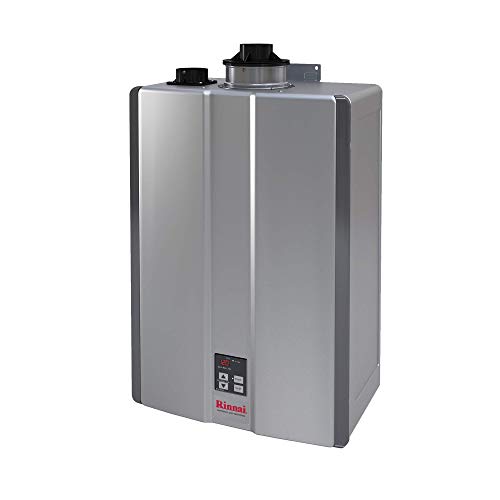
Rinnai 9 GPM Indoor Condensing Natural Gas Heater
Best for: Indoor natural gas homes needing high flow
- Fuel Type
- Natural Gas
- Flow Rate
- 9 GPM
- Installation Location
- Indoor
- Dimensions
- 31.3 x 11.5 x 18.5 inches
- Venting Type
- Condensing
- Weight
- 72.5 pounds
View on Amazon: Rinnai 9 GPM Indoor Condensing Natural Gas Heater Affiliate link
The Rinnai RU160iN is an indoor, condensing tankless water heater running on natural gas. It delivers 9 GPM, supporting up to six appliances. Its compact 31.3-inch height fits tight spaces. The unit weighs 72.5 pounds and features a 15-year heat exchanger warranty. It is ENERGY STAR qualified with a 0.97 Uniform Energy Factor. This model suits homes needing high flow and efficiency without outdoor venting.
Pros
- 9 GPM flow rate for multiple simultaneous uses
- Condensing design with 0.97 UEF efficiency
- 15-year residential heat exchanger warranty
Cons
- Indoor installation only; not for outdoor use
- Requires professional installation
- Controlr Wi-Fi module sold separately
Good fit if
- You need high hot water flow for a large home
- You want maximum energy efficiency with natural gas
- You have space for indoor installation
Skip if
- You require outdoor installation capability
- You are using propane instead of natural gas
- You want built-in Wi-Fi control without extra parts
Verdict: Rinnai RU160iN 9 GPM Natural Gas is a high-efficiency indoor unit for homes needing strong flow. It fits buyers prioritizing energy savings and durability over outdoor flexibility.
Specifications side by side
| Spec | Rinnai 6.1 GPM Outdoor Propane Water Heater | Rinnai 9 GPM Indoor Condensing Natural Gas Heater |
|---|---|---|
| Fuel Type | Propane | Natural Gas |
| Flow Rate | 6.1 GPM | 9 GPM |
| BTU | 160k BTU | not stated |
| Installation Location | Outdoor | Indoor |
| Dimensions | 24.6 x 14.1 x 10.8 in | 31.3 x 11.5 x 18.5 inches |
| Venting Type | Non-Condensing | Condensing |
| Weight | 49.2 pounds | 72.5 pounds |
| Size | 6.6 GPM | 9 GPM |
| Color | Silver | Silver |
| Model | REU-VE2125WD-US-P | RU160in |
Frequently asked questions
Can I install the Rinnai RU160iN outside?
No. The RU160iN is designed strictly for indoor installation. Its condensing venting system requires specific indoor air handling and drainage. The RE160eP is built for outdoor use with weather-resistant materials. You must follow the manufacturer's location guidelines to ensure safe operation and proper ventilation.
Which unit uses propane fuel?
The Rinnai RE160eP runs on propane. The RU160iN uses natural gas. You cannot switch fuels between these models without major component changes. Choose the RE160eP if your home has a propane tank supply. Select the RU160iN only if you have a natural gas line connection.
How much space does each heater take up?
The RE160eP measures 14.1 inches wide, 24.6 inches high, and 10.8 inches long. It weighs 49.2 pounds. The RU160iN is larger at 11.5 inches wide, 31.3 inches high, and 18.5 inches long. It weighs 72.5 pounds. The RE160eP fits tighter spaces due to its smaller footprint.
Does the RU160iN have a higher flow rate?
Yes. The RU160iN delivers 9 GPM. The RE160eP provides 6.6 GPM. Higher flow supports more simultaneous fixtures. The RU160iN suits larger households with high water demand. The RE160eP is sufficient for moderate usage. Check your fixture count before choosing based on flow requirements.
What is the difference in venting types?
The RE160eP uses non-condensing venting. It exhausts hot gases directly. The RU160iN uses condensing venting. It recovers heat from exhaust gases. Condensing units are more efficient but require specific drain connections. Non-condensing units are simpler to vent but less energy efficient.
Are both units the same color?
Yes. Both the RE160eP and RU160iN feature a silver finish. The color is cosmetic and does not affect performance. You can choose either unit based on specs rather than appearance. Both models maintain a consistent industrial look suitable for utility areas or outdoor enclosures.