APUS Propane Tankless Water Heater vs APUS 27kW Electric Tankless Water Heater (2026): Key Differences
As an Amazon Associate we earn from qualifying purchases. Links on this page are affiliate links.
Comparing the apus propane tankless water heater vs 27kw electric tankless water heater helps you choose the right system for your home. Both units offer precise digital temperature control and compact wall-mounted designs for space saving. The main difference lies in their power source and capacity. One uses propane gas for high flow, while the other relies on electric power for whole-home coverage. Your choice depends on your available utility connections and hot water needs.
Key differences
| Aspect | APUS 95,000 BTU 4.42 GPM Indoor Propane Heater | APUS 27kW 240V Tankless Water Heater |
|---|---|---|
| Fuel Type | Propane | Electric |
| Voltage | 120V AC | 240V |
| Flow Rate | 4.42 GPM | Up to 6.5 GPM |
| Heating Capacity | 95,000 BTU | 27kW |
| Dimensions | 20.55 x 13.27 x 5.91 inches | 17.7 x 11.4 x 3.5 inches |
Which one should you choose?
Choose APUS 95,000 BTU 4.42 GPM Indoor Propane Heater if
- You need a high flow rate for multiple simultaneous showers and have propane access.
- You require a 120V AC connection for simpler electrical installation.
- You want a unit with built-in freeze protection that activates automatically.
Choose APUS 27kW 240V Tankless Water Heater if
- You need the highest possible flow rate for a larger household.
- You prefer a more compact footprint to save wall space.
- You have access to 240V power and want self-modulating efficiency.
Verdict: Choose the propane model if you need high flow with a standard 120V connection and propane availability. Pick the electric model if you prioritize maximum flow capacity and a smaller physical size. Both provide steady temperature control for comfortable daily use.
Propane vs Electric Key Specs
Fuel type
Product A runs on propane gas, requiring a connection to a liquid gas supply line. This makes it suitable for homes with existing gas infrastructure or those in areas where natural gas is not available. Product B uses electricity, drawing power from a standard residential circuit. Electric units do not produce combustion byproducts, which simplifies placement options as long as electrical capacity is sufficient. You must choose between the energy source available at your location. Propane offers independence from utility grids, while electric models rely entirely on the electrical system. Both are clean in their operation, but the fuel source dictates your installation requirements and ongoing energy costs.
Flow rate
Product B delivers a higher maximum flow rate of up to 6.5 GPM. This capacity supports simultaneous use in three to four locations, such as multiple showers, a kitchen sink, and a laundry machine. Product A provides 4.42 GPM. This is sufficient for two showers and one sink running at the same time. The lower flow of Product A may restrict simultaneous high-demand activities in larger households. If you need to run hot water in many places at once, Product B has a clear advantage. For smaller households or single-bathroom setups, Product A’s flow is adequate. Check your household’s peak demand to decide if the extra gallon per minute matters for your daily routine.
Voltage
Product A operates on a standard 120V AC power supply. This low voltage requirement makes it easier to connect to existing household outlets without needing specialized electrical upgrades. Product B requires a dedicated 240V circuit. It needs three 40-amp breakers and 6x8 AWG cable for proper installation. This higher voltage demand often requires a licensed electrician to install a new circuit in your panel. If your home lacks a 240V outlet, Product B will involve additional electrical work. Product A is more flexible for DIY-friendly setups or older homes with limited electrical capacity. Choose Product A if you want to avoid major electrical renovations.
Temperature control
Both units offer precise digital temperature management, but with slight differences. Product A maintains water temperature within ±1°F of your setting, adjustable from 95°F to 140°F. It uses smart CPU technology to prevent sudden hot or cold shocks. Product B allows adjustments in 1°F increments from 86°F to 140°F. It also features a memory function to recall your last setting and self-modulating technology that adjusts power based on flow. Both ensure steady comfort. Product B’s memory feature adds convenience if you frequently change settings. Product A’s ±1°F stability is equally effective for consistent showers. Neither has a significant edge in precision, as both use advanced sensors to maintain your desired heat.
Dimensions
Product B is more compact in width and depth. It measures 17.7 inches high, 11.4 inches wide, and 3.5 inches deep. This slim profile fits easily into tight utility spaces or closets. Product A is taller and wider, measuring 20.55 inches high, 13.27 inches wide, and 5.91 inches deep. It also weighs slightly more at 19.2 pounds compared to Product B’s 19 pounds. If you have limited wall space, Product B’s narrower footprint is advantageous. Product A’s larger size accommodates its internal combustion components. Both are wall-mounted, but Product B saves more floor space visually. Measure your installation area carefully to ensure Product A fits if you prefer propane.
Which APUS tankless heater fits you
Users needing high flow for multiple bathrooms
Product B delivers up to 6.5 GPM, supporting three to four simultaneous uses. Its 27kW electric heating system adjusts power based on flow. This ensures steady hot water for larger households without waiting for tank recovery. Choose this unit if you prioritize maximum flow rate for whole-home comfort.
Renters or those with limited electrical service
Product A runs on propane and requires only 120V AC power. It avoids the need for heavy 240V electrical upgrades. With 95,000 BTU and 4.42 GPM, it meets simultaneous demands for two showers and one sink. Select this model if you have gas access but limited electrical capacity for high-wattage appliances.
Buyers wanting precise temperature stability
Product A maintains water temperature within ±1°F of your setting. Its smart CPU and high-precision sensors prevent sudden hot or cold shocks. The adjustable range of 95°F to 140°F offers reliable control. Pick this propane heater if you want consistent comfort for showers and washing without temperature fluctuations.
Those seeking compact dimensions and easy install
Product B measures 17.7 by 11.4 by 3.5 inches, offering a slim profile. It uses standard 3/4-inch NPT connections for straightforward plumbing. The wall-mounted design saves floor space in utility rooms. Choose this electric unit if you prefer a compact footprint and standard residential electrical connections for permanent installation.
The products compared

APUS 95,000 BTU 4.42 GPM Indoor Propane Heater
Best for: Indoor propane homes needing steady hot water
- Fuel Type
- Propane
- Flow Rate
- 4.42 GPM
- BTU
- 95,000 BTU
- Installation Location
- Indoor
- Voltage
- 120 V
- Temperature Control
- 95°F–140°F, ±1°F
View on Amazon: APUS 95,000 BTU 4.42 GPM Indoor Propane Heater Affiliate link
The APUS Propane Tankless Water Heater delivers 95,000 BTU of heating power with a flow rate of 4.42 GPM. It is designed for indoor installation and uses propane as its fuel source. The unit features precise temperature control within ±1°F and operates quietly at 36dB. Its compact size and LED touchscreen make it suitable for spaces where efficiency and steady hot water are priorities.
Pros
- 95,000 BTU heating capacity supports simultaneous use
- 4.42 GPM flow rate for multiple fixtures
- ±1°F temperature precision for steady comfort
- 98% thermal efficiency with 0.81 UEF rating
- Quiet 36dB operation level
Cons
- Indoor installation only
- Requires propane fuel supply
- Lower flow rate than electric competitor
Good fit if
- You need high flow for multiple showers
- You have access to propane gas
- You want precise temperature control
Skip if
- You require outdoor installation
- You only have electrical power
- You need higher than 4.42 GPM flow
Verdict: APUS 95,000 BTU Propane Tankless Heater suits homes with propane access that need steady hot water for multiple fixtures. It offers high efficiency and precise control for indoor use.
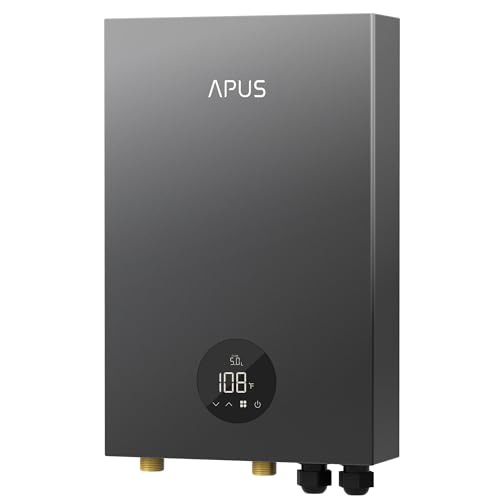
APUS 27kW 240V Tankless Water Heater
Best for: High-flow residential needs with 240V power
- Fuel Type
- Electric
- Flow Rate
- Up to 6.5 GPM
- Wattage
- 27 kW
- Installation Location
- Indoor
- Voltage
- 240V
- Temperature Control
- 86°F–140°F (1°F increments)
View on Amazon: APUS 27kW 240V Tankless Water Heater Affiliate link
This APUS unit delivers up to 6.5 GPM of hot water using 27kW of power at 240V. It features a compact wall-mounted design measuring 17.7 by 11.4 inches. The digital display allows 1°F adjustments between 86°F and 140°F. Self-modulating heating maintains stable temperatures. It suits larger households needing continuous flow for multiple simultaneous uses.
Pros
- High flow rate of up to 6.5 GPM
- Precise 1°F temperature adjustments via digital display
- Self-modulating technology adjusts output to flow
- Compact wall-mounted size saves floor space
Cons
- Requires 3x40A breakers and 6x8 AWG cable
- Higher electrical demand than propane models
- Limited to indoor installation only
Good fit if
- You need high flow for 3-4 simultaneous uses
- You want precise temperature control in 1°F increments
- You have the required 240V electrical capacity
Skip if
- You lack space for 3x40A breakers
- You need outdoor installation capability
- You prefer propane fuel sources
Verdict: APUS 27kW Electric Tankless Water Heater fits homes with strong electrical service that need high flow for multiple bathrooms. It offers precise control and compact sizing for utility rooms.
Specifications side by side
| Spec | APUS 95,000 BTU 4.42 GPM Indoor Propane Heater | APUS 27kW 240V Tankless Water Heater |
|---|---|---|
| Fuel Type | Propane | Electric |
| Flow Rate | 4.42 GPM | Up to 6.5 GPM |
| BTU | 95,000 BTU | not stated |
| Wattage | not stated | 27 kW |
| Installation Location | Indoor | Indoor |
| Voltage | 120 V | 240V |
| Temperature Control | 95°F–140°F, ±1°F | 86°F–140°F (1°F increments) |
| Dimensions | 20.55 x 13.27 x 5.91 in | 17.7 × 11.4 × 3.5 in |
| Use | not stated | Whole House |
| Weight | 19.2 pounds | 19 pounds |
| Color | Propane Gas,4.42GPM,95,000BTU,Space Gray | AP-27kW,Gray |
| Model | AP-AWH-Q13LPG | AP- ADSK-270G13 |
Frequently asked questions
Which APUS tankless heater has a higher flow rate?
The 27kW electric model delivers a higher flow rate. It provides up to 5.0 GPM of hot water. The propane unit offers 4.42 GPM. This makes the electric option better for simultaneous use in multiple bathrooms. You get more water volume with the electric heater.
Is the APUS propane heater safe for indoor installation?
Yes, the propane model is designed for indoor use. Its specifications list indoor installation as the intended location. This makes it suitable for utility rooms or basements. You must ensure proper ventilation for propane combustion. The electric model also fits indoor spaces but relies on electrical connections.
What voltage does the APUS 27kW electric heater require?
The electric unit requires a 240V power supply. This is standard for high-wattage tankless water heaters. You need a dedicated circuit with sufficient amperage. Check your home’s electrical panel before installation. The propane model does not need this high-voltage connection.
How do the dimensions of these two heaters compare?
The propane heater is narrower but taller. It measures 5.9 inches wide and 20.6 inches high. The electric unit is wider but shorter. It measures 11.4 inches wide and 17.7 inches high. Both are compact for wall mounting. Choose based on your available wall space.
Which unit weighs less?
The electric heater is slightly lighter. It weighs 19 pounds. The propane model weighs 19.2 pounds. The difference is minimal. Both units are lightweight enough for most wall brackets. You can mount either without heavy-duty reinforcement.
Can I use the propane heater if I have no gas line?
No, you cannot use the propane heater without a propane supply. It requires a connection to a liquid gas line. You need either a tank or a piped propane source. The electric model is a better choice if you lack gas infrastructure. It only needs electrical power.
What is the best use case for the 27kW electric heater?
This model suits homes with strong electrical service. It provides high flow for multiple bathrooms. The 27kW output supports steady hot water for larger households. It is ideal for utility rooms where space is limited. You get precise control with high volume.