120,000 BTU vs 150,000 BTU Tankless Water Heaters: Which Should You Buy?
As an Amazon Associate we earn from qualifying purchases. Links on this page are affiliate links.
When comparing a 120000 btu vs 150000 btu tankless water heater, you face a choice between propane and natural gas systems. Both units are designed for indoor whole-house use and deliver on-demand hot water. The primary difference lies in their fuel source and peak output capacity. One model offers 120,000 BTUs with a 5.43 GPM flow rate, while the other provides 150,000 BTUs with up to 5.8 GPM. Your decision depends on your existing fuel infrastructure and specific hot water demands.
Key differences
| Aspect | APUS 5.43 GPM Propane Tankless Water Heater | GASLAND Gasmart E Indoor Natural Gas Tankless Heater |
|---|---|---|
| Fuel Type | Propane | Natural Gas |
| Heating Capacity | 120,000 BTU | 150,000 BTU |
| Flow Rate | 5.43 GPM | Up to 5.8 GPM |
| Voltage | 120V AC | Not listed |
| Weight | 19.2 pounds | 33.1 pounds |
Which one should you choose?
Choose APUS 5.43 GPM Propane Tankless Water Heater if
- You have a propane supply and need a lighter unit for easier installation.
- You require precise temperature control with ±1°F regulation via an LED touchscreen.
- You want a system with a specified 0.81 UEF and oxygen-free copper heat exchanger.
Choose GASLAND Gasmart E Indoor Natural Gas Tankless Heater if
- You have access to natural gas and need the highest heating capacity in this comparison.
- You prefer a unit certified by CSA for safety and reliability.
- You need a flow rate that reaches up to 5.8 GPM for multiple simultaneous uses.
Verdict: Choose the 120,000 BTU model if your home is already plumbed for propane and you value a lighter, more compact unit with precise digital controls. Select the 150,000 BTU model if you have natural gas available and need maximum flow capacity for larger households. Both units serve whole-house needs, so your fuel type is the deciding factor.
Comparing BTU Output and Fuel Types
Fuel Type
The APUS unit runs on propane, while the GASLAND model uses natural gas. This choice affects your fuel supply infrastructure. Propane requires a tank, which you must monitor and refill. Natural gas connects directly to your home’s utility line for continuous supply. Both gases are efficient for indoor heating. Your existing connection determines which unit fits your home’s setup. If you already have a natural gas line, the GASLAND heater integrates seamlessly. If you rely on propane tanks, the APUS unit is the logical choice. Neither fuel is superior in performance; the decision rests on your current home utilities.
Flow Rate
Flow rate dictates how many fixtures can run simultaneously. The APUS heater delivers 5.43 GPM, supporting two showers and a sink for multi-person households. The GASLAND unit offers up to 5.8 GPM, providing slightly higher capacity for whole-house demand. This extra flow allows for more concurrent usage without significant temperature drops. If you frequently run multiple high-demand fixtures, the GASLAND model provides a marginally better buffer. However, both units exceed the needs of most standard homes. The difference is small but measurable in peak usage scenarios.
Temperature Control
Precision matters for comfort. The APUS heater features ±1°F control, regulated by high-precision sensors and a smart CPU. It maintains stability even when another faucet opens. The GASLAND unit does not list specific temperature fluctuation metrics in its data. It includes overheat protection and flame-out safety features, but lacks the explicit fine-tuning description. For users who prefer exact temperature settings, the APUS LED touchscreen and sensor technology offer clearer oversight. The GASLAND model relies on general safety mechanisms rather than active micro-adjustments.
Energy Efficiency
Efficiency impacts long-term operation. The APUS unit achieves a UEF of 0.81 with oxygen-free copper heat transfer and segmented combustion. It claims up to 30% savings versus conventional tanks. The GASLAND heater has a UEF of 0.8, claiming 34% efficiency gains over a 50-gallon tank. Both values are excellent for tankless systems. The APUS has a slight numerical edge in UEF. However, the GASLAND cites greater reduction in NOx emissions. Both units are eco-friendly options that reduce energy waste compared to storage tanks.
Dimensions
Space constraints vary by installation site. The APUS unit measures 20.55 H × 13.27 W × 5.91 D inches. The GASLAND model is 24.7 H × 14.3 W × 14.3 D inches. The APUS is taller but significantly narrower and shallower. This compact footprint makes it easier to fit in tight closets or narrow utility spaces. The GASLAND unit is wider and deeper, requiring more wall space. If you have limited width available, the APUS design is more flexible. Both are wall-mounted, but the APUS dimensions offer better adaptability for smaller indoor areas.
Voltage
Power requirements differ between the two. The APUS heater uses standard 120V AC for its controls. This is common for many indoor residential circuits. The GASLAND unit does not list its voltage specification in the provided data. You must verify its electrical needs before installation. If your home has standard 120V outlets nearby, the APUS unit is easier to integrate without checking for specialized power setups. The missing voltage data for the GASLAND model creates uncertainty for electrical planning.
Which unit fits your home best
You need precise temperature control
The APUS unit offers ±1°F control from 95–149°F. High-precision sensors and a smart CPU regulate temperature when another faucet opens. An LED touchscreen displays your setting. This accuracy ensures consistent comfort for showers and sinks without sudden temperature drops during use.
You want maximum flow rate
The GASLAND model delivers up to 5.8 GPM. This higher flow rate supports simultaneous use in larger households. It connects to natural gas for continuous supply. The 150,000 BTU output ensures rapid heating even during peak demand times for laundry or multiple showers.
You prioritize compact installation size
The APUS unit measures 20.55 x 13.27 x 5.91 inches. Its wall-mounted design preserves floor space in tight areas. At 19.2 pounds, it is lighter than the alternative. The compact cabinet fits easily into closets or utility rooms without requiring extensive structural modifications.
You value certified safety standards
The GASLAND heater is CSA certified for indoor use. It includes overheat protection, flame-out protection, and freeze protection. These features meet strict safety standards for reliable operation. The certification provides assurance for whole-house applications where safety compliance is critical for your peace of mind.
Quick picks
| # | Product | Best for | Price |
|---|---|---|---|
| 1 | APUS 5.43 GPM Propane Tankless Water Heater | Indoor propane homes needing high flow | Check price of APUS 5.43 GPM Propane Tankless Water Heater on Amazon |
| 2 | GASLAND Gasmart E Indoor Natural Gas Tankless Heater | Whole-house natural gas heating needs | Check price of GASLAND Gasmart E Indoor Natural Gas Tankless Heater on Amazon |
The products compared

APUS 5.43 GPM Propane Tankless Water Heater
Best for: Indoor propane homes needing high flow
- BTU
- 120,000 BTU (what this guide is about)
- Fuel Type
- Propane
- Flow Rate
- 5.43 GPM
- Installation Location
- Indoor
- Voltage
- 120V AC
- Temperature Control
- 95–149°F, ±1°F
View on Amazon: APUS 5.43 GPM Propane Tankless Water Heater Affiliate link
This APUS unit delivers 120,000 BTU and 5.43 GPM for indoor propane use. It supports three to four water points simultaneously. The LED touchscreen allows ±1°F temperature control. Oxygen-free copper heating provides a 0.81 UEF. Its compact 20.55 x 13.27 x 5.91-inch design mounts to walls. It suits larger homes needing steady hot water flow.
Pros
- 120,000 BTU output for high demand
- 5.43 GPM flow rate supports multiple fixtures
- ±1°F precise temperature control via LED screen
- 0.81 UEF with oxygen-free copper heat exchanger
Cons
- Lower flow rate than 150,000 BTU competitors
- Indoor installation only
- 2-year warranty coverage
Good fit if
- You need high flow for multiple bathrooms
- You have indoor propane access
- You want precise digital temperature control
Skip if
- You require outdoor installation
- You need natural gas fuel
- You want a longer warranty period
Verdict: APUS 120k BTU Propane Tankless Heater fits homes needing strong flow for multiple showers. It offers precise control but lacks the output of 150,000 BTU models.
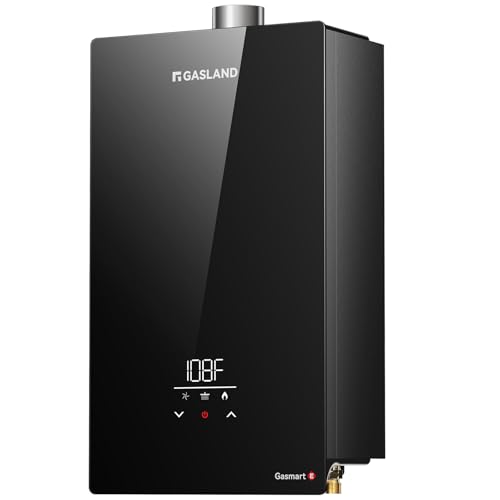
GASLAND Gasmart E Indoor Natural Gas Tankless Heater
Best for: Whole-house natural gas heating needs
- BTU
- 150,000 BTU (what this guide is about)
- Fuel Type
- Natural Gas
- Installation Location
- Indoor
- Use
- Whole House
- Dimensions
- 14.3 × 14.3 × 24.7 inches
- Weight
- 33.1 pounds
View on Amazon: GASLAND Gasmart E Indoor Natural Gas Tankless Heater Affiliate link
This GASLAND unit delivers 150,000 BTU of heating power for whole-house indoor use. It provides up to 5.8 GPM of continuous hot water. The compact design measures 14.3 by 24.7 inches and weighs 33.1 pounds. With a UEF of 0.8, it offers high energy efficiency. It is suitable for homes needing reliable, on-demand hot water with built-in safety protections.
Pros
- 150,000 BTU heating capacity for strong performance
- High energy efficiency with a UEF of 0.8
- Compact suitcase-sized design fits small spaces
- CSA certified for safety standards
Cons
- Indoor installation only
- Natural gas fuel type requires specific line
- No digital display mentioned in specifications
Good fit if
- You need a high-output heater for a whole house
- You have a natural gas supply available
- You want a compact unit for indoor mounting
Skip if
- You require outdoor installation capability
- You use propane instead of natural gas
- You need a lower BTU unit for a single fixture
Verdict: GASLAND Gasmart E 150,000 BTU Indoor is a strong choice for whole-house heating. It suits buyers who need high flow rates and energy savings in an indoor setting.
Specifications side by side
| Spec | APUS 5.43 GPM Propane Tankless Water Heater | GASLAND Gasmart E Indoor Natural Gas Tankless Heater |
|---|---|---|
| Fuel Type | Propane | not stated |
| Flow Rate | 5.43 GPM | not stated |
| BTU | 120,000 BTU | not stated |
| Installation Location | Indoor | not stated |
| Voltage | 120V AC | not stated |
| Temperature Control | 95–149°F, ±1°F | not stated |
| Dimensions | 20.55 x 13.27 x 5.91 inches | not stated |
| Use | not stated | Whole House |
| Weight | 19.2 pounds | 33.1 pounds |
| Color | Space Gray | Black |
| Model | AP-AWH-Q16LPG | CE528NG |
| Size | not stated | Small |
Frequently asked questions
What is the flow rate difference between 120k and 150k BTU heaters?
The 150,000 BTU unit typically delivers higher flow rates than the 120,000 BTU model. The GASLAND 150k model is rated for whole-house use, supporting multiple simultaneous showers. The APUS 120k unit provides 5.43 GPM, which suits homes needing strong flow but may struggle in larger households with high demand.
Can I install a 150,000 BTU tankless heater indoors?
Yes, you can install the GASLAND 150,000 BTU unit indoors. It is designed for indoor natural gas connections. Ensure you have proper ventilation and gas line infrastructure. The unit measures 14.3 by 24.7 inches, making it compact for indoor utility spaces or closets with adequate airflow.
Which heater is better for precise temperature control?
The APUS 120,000 BTU unit excels in precision. It offers ±1°F control from 95–149°F. Smart sensors and a CPU regulate temperature when other faucets open. This ensures consistent comfort. The GASLAND model focuses on high output rather than fine-tuned temperature adjustments for individual fixtures.
Do I need a propane tank for the 120k BTU model?
Yes, the APUS 120,000 BTU heater runs on propane. You must maintain a propane tank supply and monitor levels for refills. This differs from natural gas models that connect directly to home lines. Plan your tank placement and refill schedule to avoid running out of fuel during use.
How much space does each unit require?
The APUS 120k unit measures 19.3 by 27.6 inches and weighs 19.2 pounds. The GASLAND 150k unit is smaller at 14.3 by 24.7 inches but heavier at 33.1 pounds. Consider wall mounting strength and clearance for maintenance. Both fit standard indoor utility areas.
Is natural gas more efficient than propane for whole-house heating?
The GASLAND 150,000 BTU model uses natural gas for whole-house heating. It offers energy savings compared to propane systems. Natural gas connects directly to your home’s supply, eliminating tank refills. This makes it convenient for continuous hot water demand in larger homes with existing gas lines.
What display features do these tankless water heaters have?
The APUS 120k unit includes an LED touchscreen to display settings. It shows precise temperature adjustments. The GASLAND 150k model does not list a specific display type in its specs. Check the user manual for interface details. Both units prioritize performance over advanced digital features.
Which model is lighter for wall mounting?
The APUS 120,000 BTU heater is lighter at 19.2 pounds. The GASLAND 150k model weighs 33.1 pounds. Lighter units are easier to mount and require less robust wall support. Ensure your mounting surface can handle the weight. The APUS unit’s smaller footprint also aids installation in tight spaces.